Imidazole → 1-Butanol, 4-[[(1,1-dimethylethyl)diphenylsilyl]oxy]-
Reaction equation

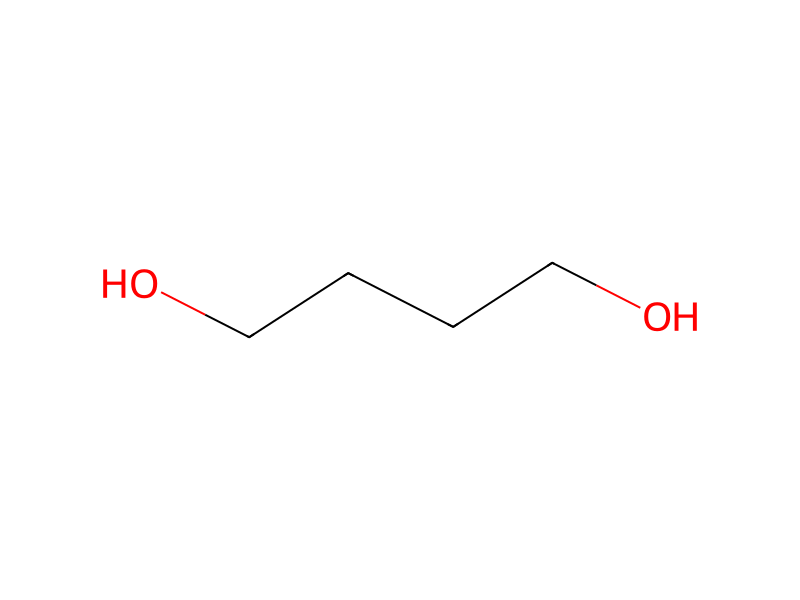
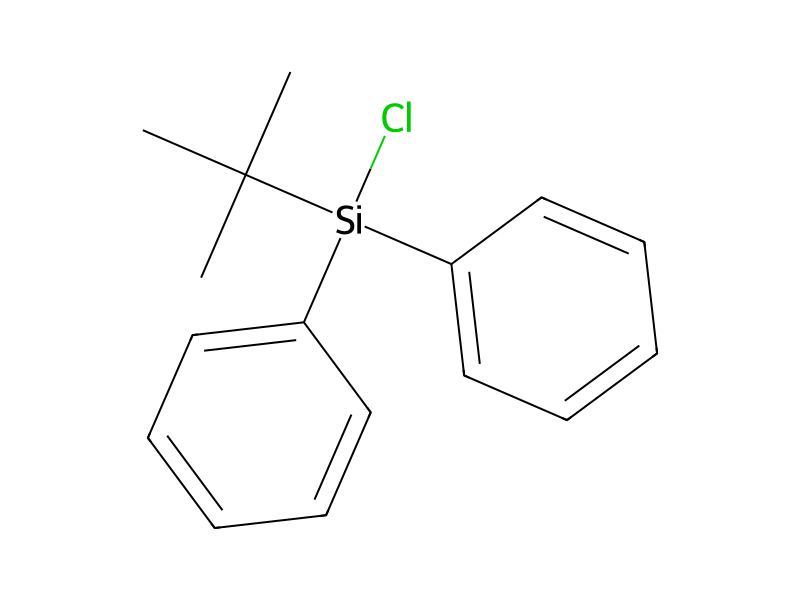
[CH2:1]([OH:6])[CH2:2][CH2:3][CH2:4][OH:5].[Si:7](Cl)([C:20]([CH3:23])([CH3:22])[CH3:21])([C:14]1[CH:19]=[CH:18][CH:17]=[CH:16][CH:15]=1)[C:8]1[CH:13]=[CH:12][CH:11]=[CH:10][CH:9]=1.N1C=CN=C1.O>CN(C)C=O>[O:5]([CH2:4][CH2:3][CH2:2][CH2:1][OH:6])[Si:7]([C:20]([CH3:23])([CH3:22])[CH3:21])([C:14]1[CH:15]=[CH:16][CH:17]=[CH:18][CH:19]=1)[C:8]1[CH:13]=[CH:12][CH:11]=[CH:10][CH:9]=1Participants
6
Reactant 4


Product 1

Reagents, catalysts & solvents 1

Procedure
To a solution of 1.00 g (10.2 mmol) of 1,4-butanediol in 20 ml of dry dimethylformamide were added 2.80 g (10.2 mmol) of tert-butyldiphenylsilyl chloride and 3.47 g (51.0 mmol) of imidazole in an atmosphere of argon. The mixture was allowed to react at 0° C. for 24 hours. To the solution was added water followed by extraction with dichloromethane. The organic layer was washed with water and concentrated under reduced pressure. The residue thus obtained was subjected to silica gel column chromatography for separation and purification. Elution with dichloromethane-methanol (100:1) yielded 2.17 g (6.62 mmol) of 4-(tert-butyldiphenylsiloxy)-1-butanol.
Workup
- customto react at 0° C. for 24 hours
- extractionfollowed by extraction with dichloromethane
- washThe organic layer was washed with water
- concentrationconcentrated under reduced pressure
- customThe residue thus obtained
- customwas subjected to silica gel column chromatography for separation and purification
- washElution with dichloromethane-methanol (100:1)
Sources & evidence
- ORD record
- ord-ef9ad2f5497f4489940e4f5344d1aa09
- Source dataset
- uspto-grants-1991_08
- Patent number
- US05043142
Reaction notes
Loading…