Oxygen → Diisobutyl Succinate
Reaction equation

C=C.[C]=[O:4].O=O.N([O:9][CH2:10][CH:11]([CH3:13])[CH3:12])=O.[C:14]([O:27][CH2:28][CH:29]([CH3:31])[CH3:30])(=[O:26])[CH2:15][CH2:16][CH2:17]CC(OCC(C)C)=O>C(O)C(C)C.[Pd](Cl)Cl>[C:14]([O:27][CH2:28][CH:29]([CH3:31])[CH3:30])(=[O:26])[CH2:15][CH2:16][C:17]([O:9][CH2:10][CH:11]([CH3:13])[CH3:12])=[O:4]Participants





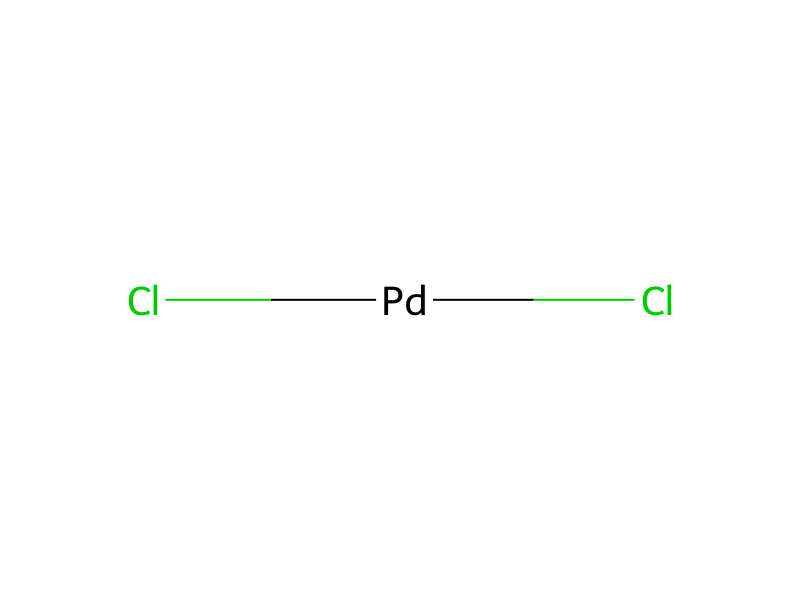

Conditions
- Temperature
- 105 °C
Procedure
An autoclave made of stainless steel, equipped with a rotary stirrer and having a capacity of 300 ml. was charged with 50 ml. of isobutanol, 50 ml. of diisobutyl adipate as a solvent and 0.19 mmol. of palladium chloride. After sealing, 20 atm. of a gas mixture consisting of 78 vol.% of ethylene, 18 vol.% of carbon monoxide and 4 vol.% of oxygen was pressured thereinto. Subsequently, after the contents of the autoclave was heated to 105° C. with stirring, the reaction was carried out for one hour while supplying the above-mentioned gas mixture at a rate of 0.6 l./min. and isobutyl nitrite dissolved in a mixed solvent of isobutanol and diisobutyl adipate (1:1, volume ratio) at a rate of 40 mmol./hr. as the result, it was found that 22.5 mmol. of diisobutyl succinate was produced and 0.54 mmol. of diisobutyl oxalate was produced as by-product.
Workup
- customequipped with a rotary stirrer
- additionwas charged with 50 ml
Sources & evidence
- ORD record
- ord-6c1ad24653dc4def8bdbec5258ecfaad
- Source dataset
- uspto-grants-1980_11
- Patent number
- US04234740
Reaction notes
Loading…