Triethylamine → S-(2-pyridinyl) 4-cyanobenzenecarbothioate
Reaction equation

[N:1]1[CH:6]=[CH:5][CH:4]=[CH:3][C:2]=1[SH:7].C(N(CC)CC)C.[C:15]([C:17]1[CH:25]=[CH:24][C:20]([C:21](Cl)=[O:22])=[CH:19][CH:18]=1)#[N:16]>O1CCCC1>[C:15]([C:17]1[CH:25]=[CH:24][C:20]([C:21](=[O:22])[S:7][C:2]2[CH:3]=[CH:4][CH:5]=[CH:6][N:1]=2)=[CH:19][CH:18]=1)#[N:16]Participants
5
Reactant 3

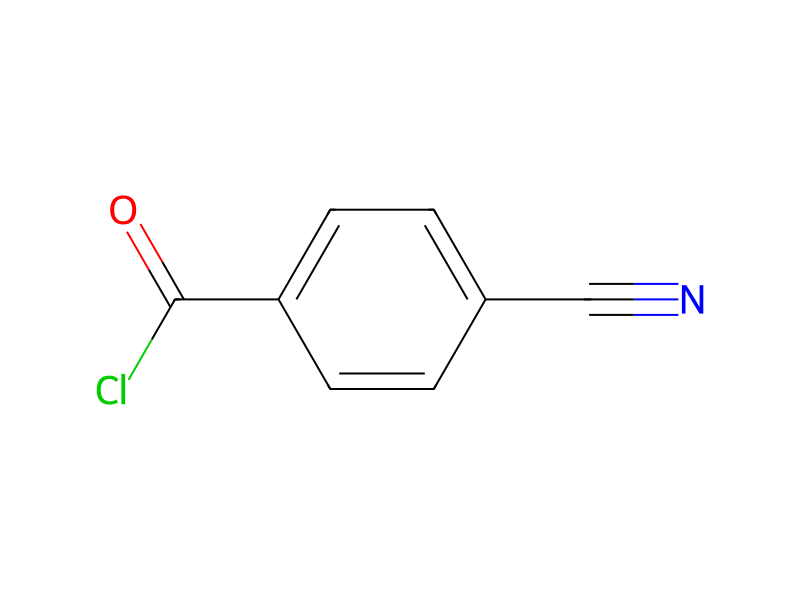

Product 1

Reagents, catalysts & solvents 1

Procedure
To a suspension of 2-pyridinethiol (17 g) in tetrahydrofuran (200 mL) was added triethylamine (15.5 g) in an ice-water bath under N2. To this was added a solution of 4-cyanobenzoyl chloride (25.3 g) in tetrahydrofuran (80 mL) below 10° C. over 30 minutes. After 15 minutes, the bath was removed and the mixture was stirred overnight at ambient temperature. The mixture was concentrated in vacuo. The residue was partitioned between chloroform and water. The organic layer was washed with saturated sodium bicarbonate and brine, dried over magnesium sulfate, and evaporated in vacuo. The residue (38 g) was triturated with isopropyl ether to give S-(2-pyridinyl) 4-cyanobenzenecarbothioate (325 g) as a pale brown solid.
Workup
- customthe bath was removed
- concentrationThe mixture was concentrated in vacuo
- customThe residue was partitioned between chloroform and water
- washThe organic layer was washed with saturated sodium bicarbonate and brine
- dry with materialdried over magnesium sulfate
- customevaporated in vacuo
- customThe residue (38 g) was triturated with isopropyl ether
Sources & evidence
- ORD record
- ord-9c689e9ab7bb45cda69bf5d815f6159a
- Source dataset
- uspto-grants-2008_01
- Patent number
- US07317009B2
Reaction notes
Loading…