Trifluoroacetic acid → cis-5-Benzyltetrahydropyrrolo[3,4-c]pyrrole-1,3(2H,3aH)-dione
Reaction equation

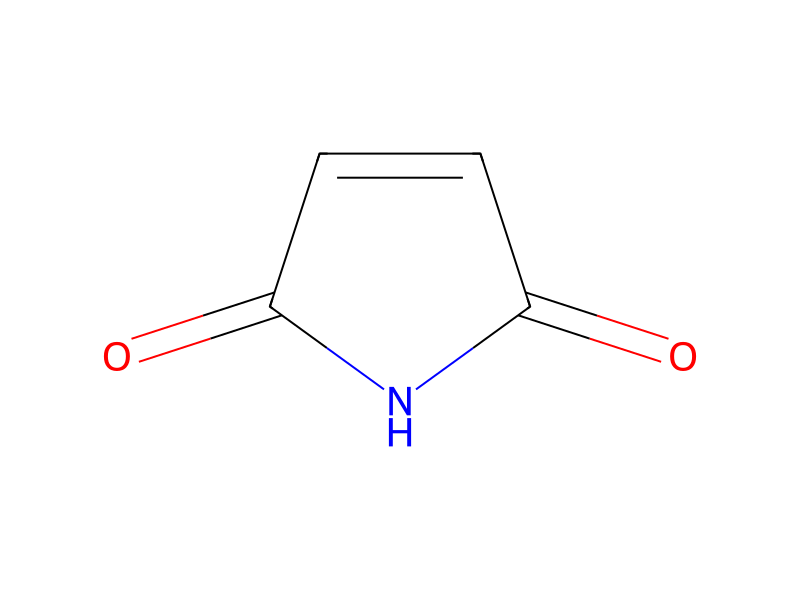
[NH:1]1[C:5](=[O:6])[CH:4]=[CH:3][C:2]1=[O:7].FC(F)(F)C(O)=O.[CH2:15]([N:22]([CH2:28]OC)[CH2:23][Si](C)(C)C)[C:16]1[CH:21]=[CH:20][CH:19]=[CH:18][CH:17]=1>ClCCl>[CH2:15]([N:22]1[CH2:28][C@@H:3]2[C:2](=[O:7])[NH:1][C:5](=[O:6])[C@@H:4]2[CH2:23]1)[C:16]1[CH:21]=[CH:20][CH:19]=[CH:18][CH:17]=1Participants
5




Procedure
1H-Pyrrole-2,5-dione (8.0 g, 82 mmol) in dichloromethane (220 mL) at 0° C. was treated with trifluoroacetic acid (0.93 g, 8.2 mmol) and then treated with N-benzyl-N-(methoxymethyl)-N-[(trimethylsilyl)methyl]amine (26 g, 110 mmol) prepared according to (Organic Synthesis (1988), 67, 133-135) in dichloromethane (15 mL) dropwise over 30 minutes. The mixture was allowed to stir at ambient temperature overnight and then concentrated under reduced pressure. The residue was triturated with ethyl acetate:hexane (3:7, 50 mL), cooled to 0° C., and filtered to provide the title compound as a white solid (5.86 g, 31% yield). MS (DCI/NH3) m/z 231 (M+H)+.
Workup
- customprepared
- concentrationconcentrated under reduced pressure
- customThe residue was triturated with ethyl acetate:hexane (3:7, 50 mL)
- temperaturecooled to 0° C.
- filtrationfiltered
Sources & evidence
- ORD record
- ord-8f883108f7c44053b0dc7f1140db3175
- Source dataset
- uspto-grants-2008_01
- Patent number
- US07319106B2
Reaction notes
Loading…