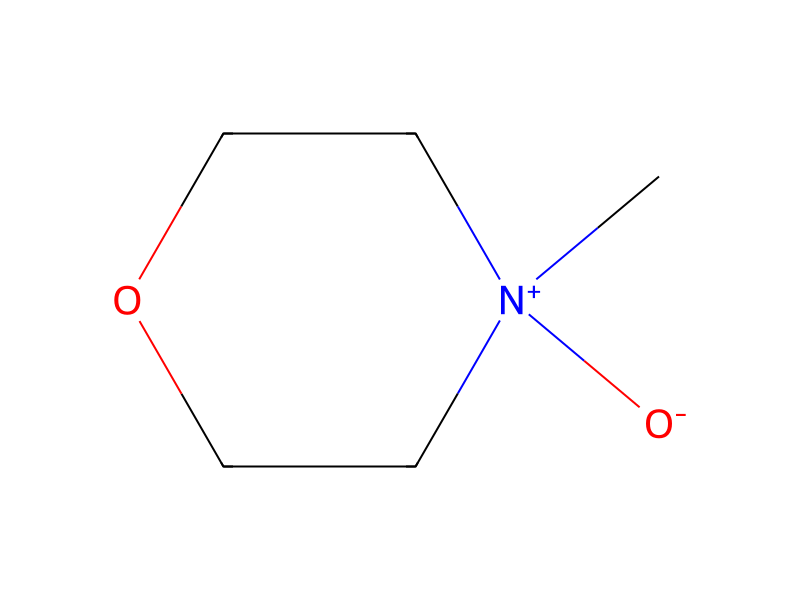
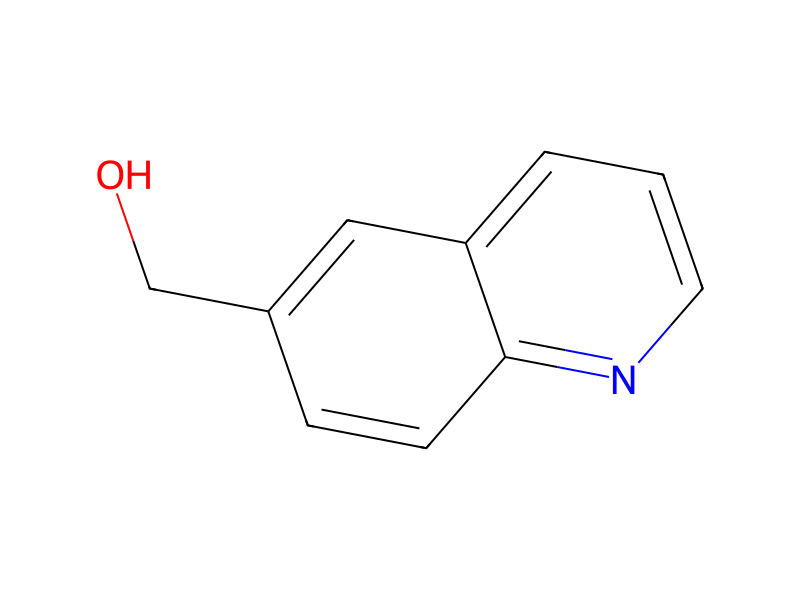
Methyl morpholine oxide → 6-Quinolinecarbaldehyde
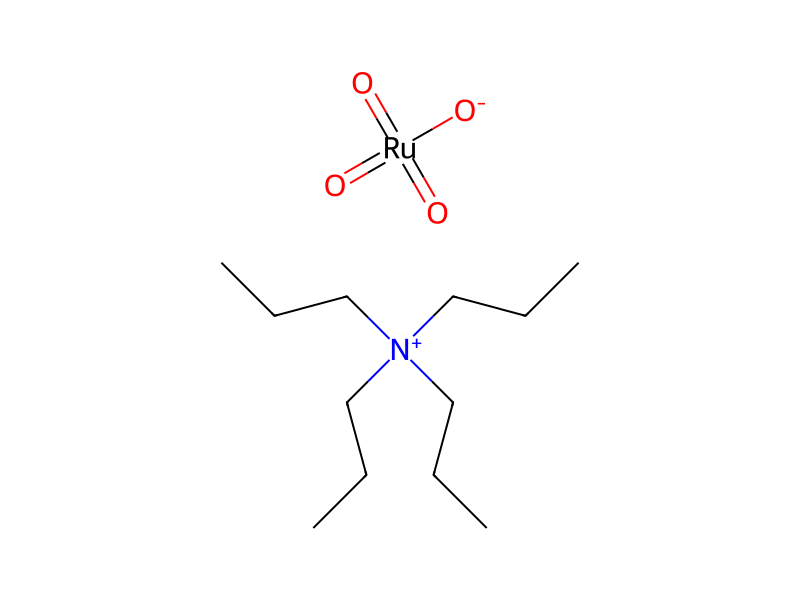
Reaction equation

[N:1]1[C:10]2[C:5](=[CH:6][C:7]([CH2:11][OH:12])=[CH:8][CH:9]=2)[CH:4]=[CH:3][CH:2]=1.C[N+]1([O-])CCOCC1>C(Cl)Cl.CCC[N+](CCC)(CCC)CCC.[O-][Ru](=O)(=O)=O>[N:1]1[C:10]2[C:5](=[CH:6][C:7]([CH:11]=[O:12])=[CH:8][CH:9]=2)[CH:4]=[CH:3][CH:2]=1Participants
5
Reactant 2
Product 1

Reagents, catalysts & solvents 2

Procedure
To a stirred solution of quinolin-6-yl-methanol (1.14 g, 7.16 mmol) in CH2Cl2 (100 mL) at 0° C. were added N-methylmorpholine N-oxide (1.25 g, 10.7 mmol), 4 Å molecular sieves (500 mg) and TPAP (60 mg). The mixture was stirred at RT until the starting material was consumed, then filtered through a Celite® pad. Solvent was evaporated to give the aldehyde.
Workup
- customwas consumed
- filtrationfiltered through a Celite® pad
- customSolvent was evaporated
Sources & evidence
- ORD record
- ord-5190cd4a7c974e16ad9f66140e9e5f59
- Source dataset
- uspto-grants-2008_01
- Patent number
- US07320992B2
Reaction notes
Loading…