Hydrochloric Acid → 9-Bromo-1,1-dimethoxynonane
Reaction equation

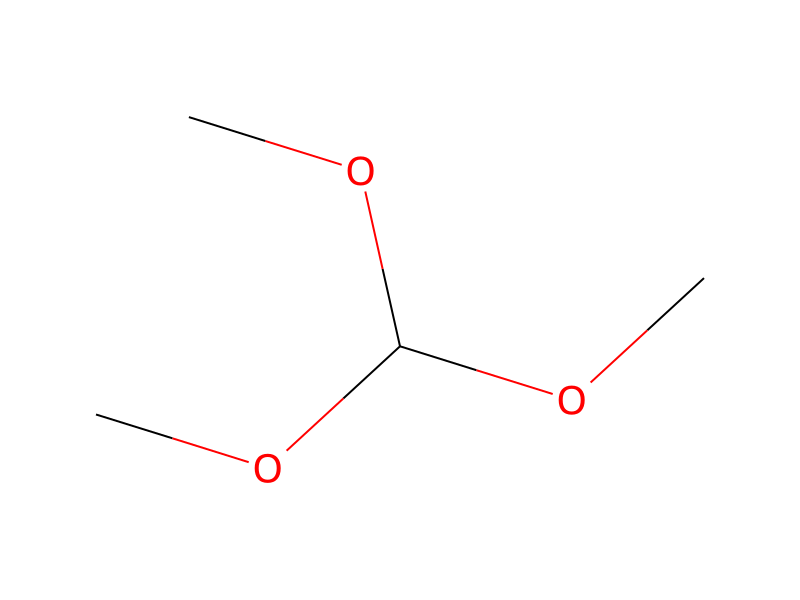
[Br:1][CH2:2][CH2:3][CH2:4][CH2:5][CH2:6][CH2:7][CH2:8][CH2:9]C=O.[CH3:12][O:13][CH:14](OC)[O:15][CH3:16].Cl>O1CCOCC1.C(=O)(O)[O-].[Na+].CO>[Br:1][CH2:2][CH2:3][CH2:4][CH2:5][CH2:6][CH2:7][CH2:8][CH2:9][CH:14]([O:15][CH3:16])[O:13][CH3:12]Participants






Procedure
To a 100 mL round-bottomed flask was added 9-bromononanal (7.2 g, 32.5 mmol), methanol (30 mL) and trimethylorthoformate (4 mL, 36.5 mmol). A solution of 4N hydrochloric acid in dioxane (0.2 mL, 0.8 mmol) was added and the resulting mixture was refluxed for 3 h. The reaction mixture was then cooled to room temperature and solid sodium bicarbonate (100 mg, 1.2 mmol) was added. The resulting mixture was concentrated to one forth its original volume under reduced pressure and then ethyl acetate (50 mL) was added. The organic layer was washed with water (2×40 mL), dried (MgSO4), filtered and concentrated under reduced pressure to afford the title intermediate (8.44 g, (97% yield)) as a liquid, which as used in the next step without further purification.
Workup
- temperaturethe resulting mixture was refluxed for 3 h
- concentrationThe resulting mixture was concentrated to one forth its original volume under reduced pressure
- additionethyl acetate (50 mL) was added
- washThe organic layer was washed with water (2×40 mL)
- dry with materialdried (MgSO4)
- filtrationfiltered
- concentrationconcentrated under reduced pressure
Sources & evidence
- ORD record
- ord-0f5929b7511c4d55a1f30451c1060bb8
- Source dataset
- uspto-grants-2008_01
- Patent number
- US07320990B2
Reaction notes
Loading…