Undecafluoropiperidine → 2-Fluoropyridine
Reaction equation

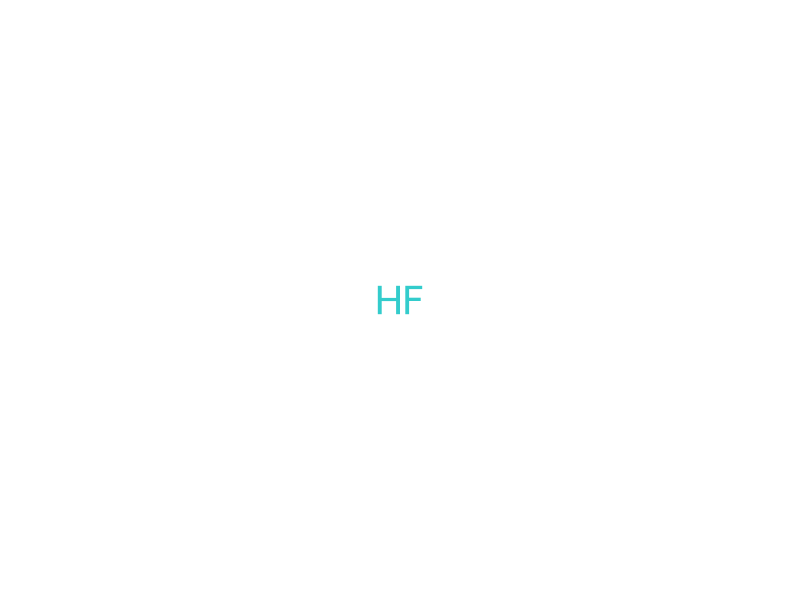
[F:1][C:2]1(F)[C:7](F)(F)[C:6](F)(F)[C:5](F)(F)[C:4](F)(F)[N:3]1F>F>[F:1][C:2]1[CH:7]=[CH:6][CH:5]=[CH:4][N:3]=1.[N:3]1[CH:4]=[CH:5][CH:6]=[CH:7][CH:2]=1Participants
Reactant 1

Product 2


Reagents, catalysts & solvents 1
Procedure
Attention has recently been directed to using compounds of the N-F class, i.e., having an N-F bond, as electrophilic fluorinating agents. The prototypical member of this class is perfluoro-N-fluoropiperidine (R. E. Banks and G. E. Williamson, Chem. Ind. [London], 1964 and R. E. Banks, et al., J. Chem. Soc., Perkin Trans. I, [1972], 1098). However, this compound is obtainable only in low yields by electrochemical fluorination of either pyridine (about 8% yield) or 2-fluoropyridine (about 13%) in anhydrous hydrogen fluoride. Furthermore, this reagent is inadequately active in several applications, and, on transfer of fluorine to a carbanionic substrate, may liberate imidoyl fluoride perfluoro-1-azacyclohex-1-ene which then competes with the electrophilic fluorine source for the substrate. Similar problems militate against using analogous compounds such as perfluoro-(N-fluoro-2,6-dimethylpiperidine) and perfluoro-N-fluoromorpholine, (R. E. Banks, et al., J. Chem. Soc. Perkin Trans. I [1988], 2805) and poly[perfluoro-(N-fluoropiperidin-4-ylethylnene)](R. E. Banks, et al, J. Fluorine Chem., [1986], 34 281) as electrophilic fluorinating agents.
Sources & evidence
- ORD record
- ord-3cc3d9ab509e47898f82c566ea024d83
- Source dataset
- uspto-grants-1993_08
- Patent number
- US05233074
Reaction notes
Loading…