Azobisisobutyronitrile → HCID 168686, compound
Reaction equation

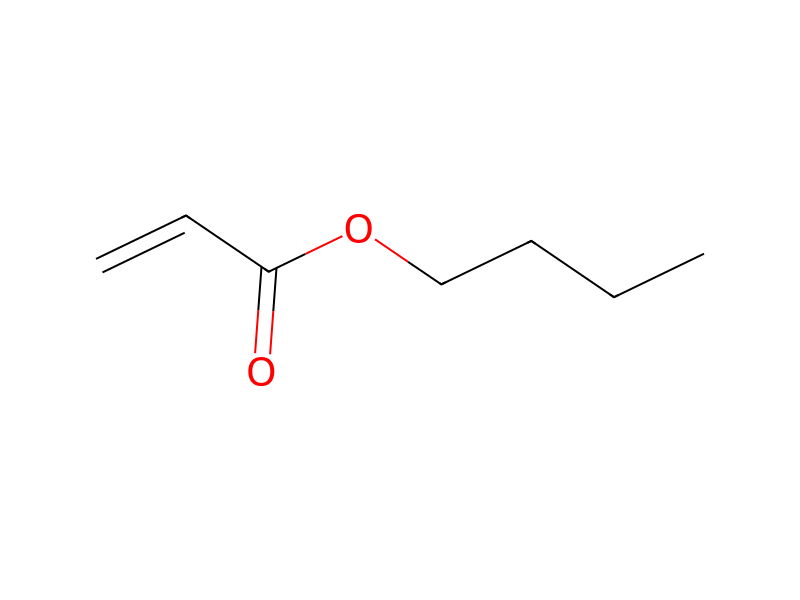
[C:1]([O:5][CH2:6][CH3:7])(=[O:4])[CH:2]=[CH2:3].[C:8]([O:12][CH2:13][CH2:14][CH2:15][CH3:16])(=[O:11])[CH:9]=[CH2:10].[C:17]([OH:21])(=[O:20])[CH:18]=[CH2:19].N(C(C)(C)C#N)=NC(C)(C)C#N.C(S)CCCCCCCCCCC>>[CH2:13]([O:12][C:8](=[O:11])[CH:9]=[CH2:10])[CH2:14][CH2:15][CH3:16].[CH2:6]([O:5][C:1](=[O:4])[CH:2]=[CH2:3])[CH3:7].[C:17]([OH:21])(=[O:20])[CH:18]=[CH2:19]Participants
6





Conditions
- Temperature
- 120 °C
Procedure
Polymerization was initiated with a solution of 21.7 g of ethyl acrylate, 50 g of butyl acrylate, 3 g of acrylic acid, 2 g of azo-bis-isobutyronitrile and 0.2 g of lauryl mercaptan in a reactor by slow heating, starting at 25° C. The polymerization started vigorously at 55° C. The main part of the polymerization was carried out between 100° and 120° C. by a slow addition of 250 g of the same monomer mixture over a period of two hours with external waterbath cooling. Since stirring becomes difficult at this stage, the material was removed from the reactor and heated for two additional hours at 120° C. The polymer material was highly viscous with comonomer proportions of 67:28:5.
Workup
- customPolymerization
- customstarting at 25° C
- customstarted vigorously at 55° C
- temperaturecooling
- customthe material was removed from the reactor
Sources & evidence
- ORD record
- ord-8c702ae8fe094d0f9e68a6ba6ff66490
- Source dataset
- uspto-grants-1993_08
- Patent number
- US05234730
Reaction notes
Loading…