Ethylamine → (E)-N-(6,6-dimethyl-2-hepten-4-ynyl)-N-methyl-3-hydroxybenzylamine
Reaction equation

CNCC1C=CC=C(O)C=1.[CH3:11][C:12]([CH3:30])([CH3:29])[C:13]#[C:14]/[CH:15]=[CH:16]/[CH2:17][N:18]([CH2:21][C:22]1[CH:27]=[CH:26][CH:25]=[C:24]([OH:28])[CH:23]=1)[CH2:19]C.CC(C)(C)C#C/C=C/CN(CC1C=CC=C(O)C=1)CCC.C(N(CC1C=CC=C(O)C=1)C/C=C/C#CC(OC)(C)C)C.CN.CO.C(N)C.C(N)CC.BrCC=CC#CC(OC)(C)C>CO>[CH3:11][C:12]([CH3:30])([CH3:29])[C:13]#[C:14]/[CH:15]=[CH:16]/[CH2:17][N:18]([CH2:21][C:22]1[CH:27]=[CH:26][CH:25]=[C:24]([OH:28])[CH:23]=1)[CH3:19]Participants
10
Reactant 8
 HCID 6341Ethylamine
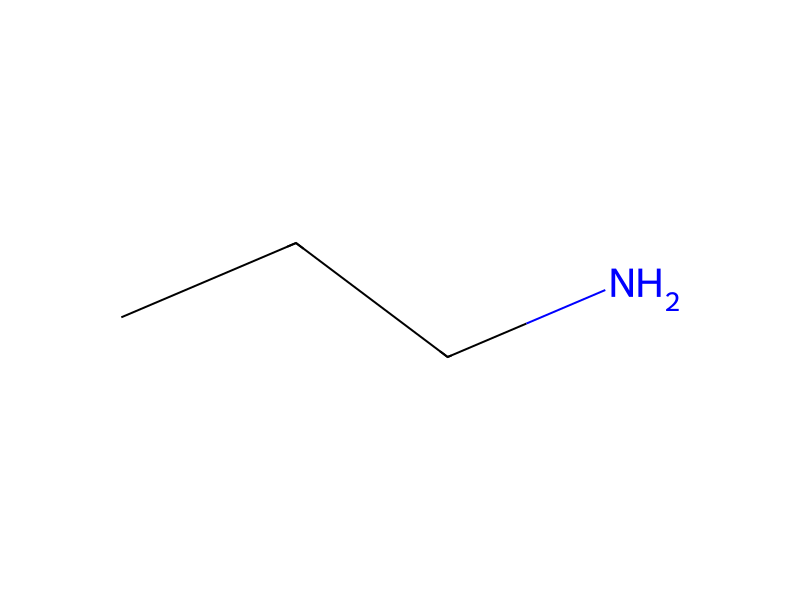 HCID 7852Propylamine
 HCID 10445905(E)-N-(6,6-Dimethyl-2-hepten-4-ynyl)-N-ethyl-3-hydroxybenzylamine
 HCID 104869053-((Methylamino)methyl)phenol
 HCID 15290087(E)-N-(6,6-Dimethyl-2-hepten-4-ynyl)-N-propyl-3-hydroxybenzylamine
 HCID 19744624(E)-N-ethyl-N-(6-methoxy-6-methyl-2-hepten-4-ynyl)-3-hydroxybenzylamine
 HCID 537832021-Bromo-6-methoxy-6-methylhept-2-en-4-yne
 HCID 57454252Monomethylamine methanol
Product 1

Reagents, catalysts & solvents 1

Procedure
The 3-hydroxybenzylamine derivatives used in Examples 26 to 48, such as (E)-N-(6,6-dimethyl-2-hepten-4-ynyl)-N-ethyl-3-hydroxybenzylamine, (E)-N-(6,6-dimethyl-2-hepten-4-ynyl)-N-propyl-3-hydroxybenzylamine or (E)-N-ethyl-N-(6-methoxy-6-methyl-2-hepten-4-ynyl)-3-hydroxybenzylamine, were obtained by performing the same reaction as in Referential Example 26 except that in place of the starting methylamine-methanol solution, a methanol solution of ethylamine or propylamine was used and as required, 1-bromo-6-methoxy-6-methyl-2-hepten-4-yne was used instead of 1-bromo-6,6-dimethyl-2-hepten-4-yne was used.
Workup
- customwere obtained
Sources & evidence
- ORD record
- ord-fa3c1194eab94af5aeb960275f79a869
- Source dataset
- uspto-grants-1993_08
- Patent number
- US05234946
Reaction notes
Loading…