Dinitrofluorobenzene → Ethyl [(2,4-dinitrophenyl)thio]acetate
Reaction equation

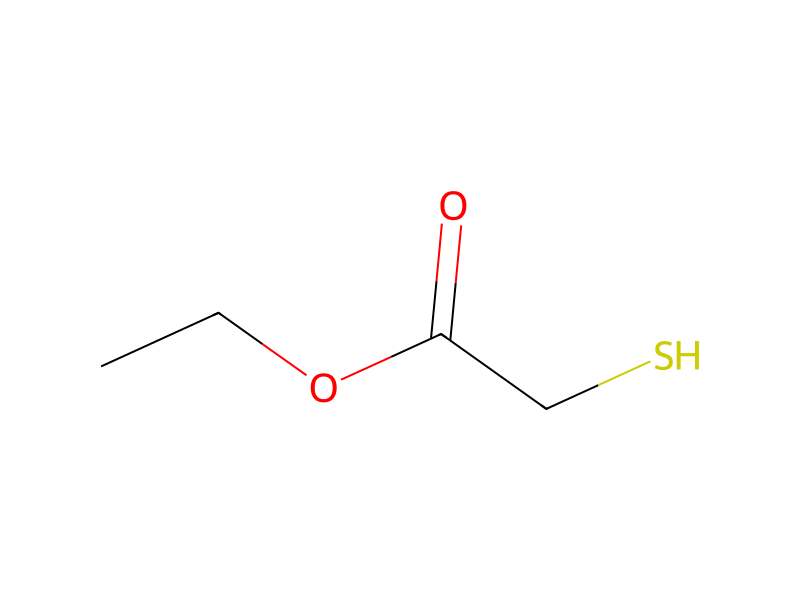
[N+:1]([C:4]1[CH:9]=[C:8]([N+:10]([O-:12])=[O:11])[CH:7]=[CH:6][C:5]=1F)([O-:3])=[O:2].C(C1C=CC=CC=1)(=O)C1C=CC=CC=1.[Na].C(N(CC)CC)C.[SH:36][CH2:37][C:38]([O:40][CH2:41][CH3:42])=[O:39]>C1COCC1>[N+:1]([C:4]1[CH:9]=[C:8]([N+:10]([O-:12])=[O:11])[CH:7]=[CH:6][C:5]=1[S:36][CH2:37][C:38]([O:40][CH2:41][CH3:42])=[O:39])([O-:3])=[O:2]Participants





Procedure
Into a 100 ml round-bottomed flask were placed 14.8 g (10 ml, 79.6 mmol) 2,4-dinitrofluorobenzene, THF (20 ml, freshly distilled from sodium benzophenone) and triethylamine (11.1 ml, 79.6 mmol). The reaction was cooled in an ice bath while 9.55 g (8.73 ml, 79.6 mmol) ethyl 2-mercaptoacetate dissolved in THF (10 ml) was added dropwise. The resulting nearly black solution was allowed to warm slowly to room temperature and stirred 18 hours. The reaction mixture was poured onto 150 ml ice and the resulting layers were separated. The aqueous phase was extracted with EtOAc (2×125 ml). The organic layers were combined and washed with water (100 ml), dried over MgSO4 and concentrated to dryness in vacuo to yield 16.9 g of red-brown solid (74.1% yield).
Workup
- customInto a 100 ml round-bottomed flask were placed
- additionwas added dropwise
- customthe resulting layers were separated
- extractionThe aqueous phase was extracted with EtOAc (2×125 ml)
- washwashed with water (100 ml)
- dry with materialdried over MgSO4
- concentrationconcentrated to dryness in vacuo
Sources & evidence
- ORD record
- ord-c12804a209614067b4e81ed44913e7e8
- Source dataset
- uspto-grants-1993_08
- Patent number
- US05238908
Reaction notes
Loading…