Potassium Iodide → HCID 54485370, compound
Reaction equation

[C:1]1([NH:7][C:8]2[CH:13]=[CH:12][CH:11]=[CH:10][CH:9]=2)[CH:6]=[CH:5][CH:4]=[CH:3][CH:2]=1.Br[CH2:15][CH:16]=[CH:17][CH2:18]Br.[I-].[K+].[OH-].[Na+]>[Br-].C([N+](CCCC)(CCCC)CCCC)CCC.O>[C:8]1([N:7]([C:1]2[CH:2]=[CH:3][CH:4]=[CH:5][CH:6]=2)[CH2:15][CH:16]=[CH:17][CH2:18][N:7]([C:8]2[CH:9]=[CH:10][CH:11]=[CH:12][CH:13]=2)[C:1]2[CH:6]=[CH:5][CH:4]=[CH:3][CH:2]=2)[CH:9]=[CH:10][CH:11]=[CH:12][CH:13]=1Participants
7

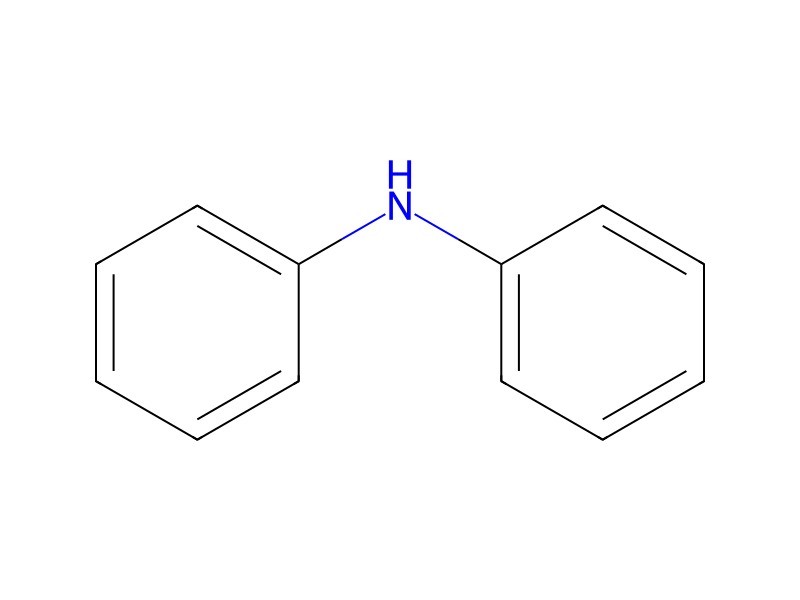





Conditions
- Temperature
- 60 °C
Procedure
A vigorously stirred mixture of diphenylamine (150 g, 0.9 mol), 1,4-dibromobut-2-ene (104 g, 0.49 mol), potassium iodide (8 g, 0.05 mol), tetrabutylammonium bromide (7 g, 0.025 mol), sodium hydroxide (43 g, 1.06 mol) and 150 ml of water is warmed to 60° C. for five hours. The mixture is allowed to cool to room temperature. The solids formed are collected and washed with water. The residue is recrystallized from ethanol to give 69 grams (36% yield) of the title compound as a tan solid melting at 105°-107° C.
Workup
- temperatureto cool to room temperature
- customThe solids formed
- customare collected
- washwashed with water
- customThe residue is recrystallized from ethanol
Sources & evidence
- ORD record
- ord-891a133642df4825a7548dc54cca4fbb
- Source dataset
- uspto-grants-1993_08
- Patent number
- US05240976
Reaction notes
Loading…