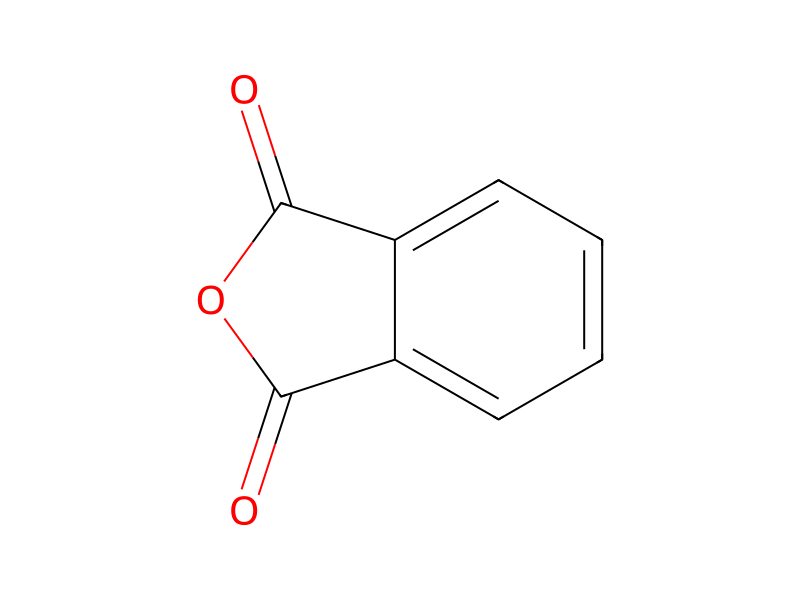
Phthalic Anhydride → N-(5-Bromopentyl)phthalimide
Reaction equation

[C:1]1(=[O:11])[O:6][C:4](=O)[C:3]2=[CH:7][CH:8]=[CH:9][CH:10]=[C:2]12.[NH2:12][CH2:13][CH2:14][CH2:15][CH2:16][CH2:17]O.C1(P(C2C=CC=CC=2)C2C=CC=CC=2)C=CC=CC=1.[Br:38]Br>C1(C)C=CC=CC=1.O>[Br:38][CH2:17][CH2:16][CH2:15][CH2:14][CH2:13][N:12]1[C:1](=[O:11])[C:2]2=[CH:10][CH:9]=[CH:8][CH:7]=[C:3]2[C:4]1=[O:6]Participants
Reactant 4



Product 1

Reagents, catalysts & solvents 2


Conditions
- Temperature
- 0 °C
Procedure
To a suspension n of phthalic anhydride (2.96 g, 20 mmol) in toluene (20 mL) was added 5-amino-1-pentanol (2.2 mL, 20 mmol) and the resulting mixture was heated to reflux for 14 hours. The solvent was removed under reduced pressure and the residue dissolved in dichloromethane (20 mL). This solution was cooled to 0° C. and triphenylphosphine (4.7 g, 18 mmol) and bromine were added. After warming to room temperature, the solution was stirred overnight and then poured into water (20 mL) and the organic phase was separated. The aqueous phase was extracted with dichloromethane (20 mL) and the combined organic phases were dried over sodium sulfate and evaporated to dryness. Silica gel chromatography using hexane/ethyl acetate (4:1) as the eluent gave the title compound as a syrup (4.13 g, 70% for 2 steps).
Workup
- temperaturethe resulting mixture was heated
- temperatureto reflux for 14 hours
- customThe solvent was removed under reduced pressure
- dissolutionthe residue dissolved in dichloromethane (20 mL)
- temperatureAfter warming to room temperature
- customthe organic phase was separated
- extractionThe aqueous phase was extracted with dichloromethane (20 mL)
- dry with materialthe combined organic phases were dried over sodium sulfate
- customevaporated to dryness
Sources & evidence
- ORD record
- ord-a6ca028a56294012909a1f754d581dd4
- Source dataset
- uspto-grants-1997_08
- Patent number
- US05654431
Reaction notes
Loading…