Sodium Hydroxide → (4S)-6-chloro-1,1-dioxo-3,4-dihydro-2H-thieno(3,2-e)thiazin-4-ol
Reaction equation

Br[CH2:2][C:3]([C:5]1[CH:9]=[C:8]([Cl:10])[S:7][C:6]=1[S:11]([NH2:14])(=[O:13])=[O:12])=[O:4].B(Cl)([C@@H]1[C@@H](C)C2C(C)(C)C(C2)C1)[C@@H]1[C@@H](C)C2C(C)(C)C(C2)C1.[K].[OH-].[Na+]>COC(C)(C)C.O1CCCC1.C(OCC)C>[Cl:10][C:8]1[S:7][C:6]2[S:11](=[O:13])(=[O:12])[NH:14][CH2:2][C@@H:3]([OH:4])[C:5]=2[CH:9]=1Participants
Reactant 4




Product 1

Reagents, catalysts & solvents 3


Procedure
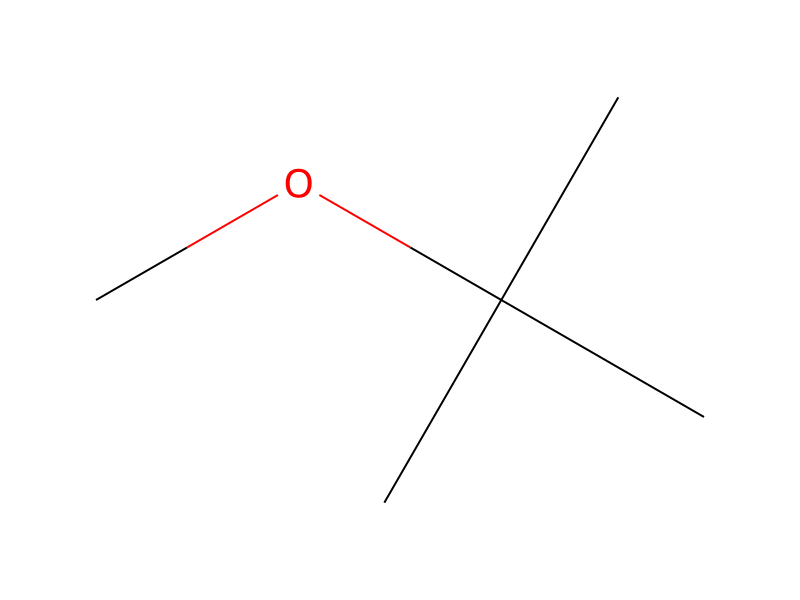
In the fourth step of the process, 3-bromoacetyl-5-chloro-2-thiophenesulfonamide (4) is reduced with an appropriate reagent to provide initially an (S)-bromohydrin, which upon subsequent treatment with aqueous sodium hydroxide cyclizes to (S)-3,4-dihydro-6-chloro-4-hydroxy-2H-thieno[3,2-e]-1,2-thiazine-1,1-dioxide (5). The preferred reducing agent is (+)-β-chlorodiisopinocampheylborane, which is well known to provide bromohydrins in high enantiomeric excess from prochiral α-bromo ketones [H. C. Brown, W. S. Park, B. T. Cho, and P. V. Ramachandran J. Org. Chem. 52, 5406 (1987) and H. C. Brown U.S. Pat. No. 4,918,246 (1990)]. Several different reaction solvents can be used for the reduction of (4), including diethyl ether, tetrahydrofuran, and t-butyl methyl ether. The reduction is typically carried out using 1.2 to 2.2 equivalents of (+)-β-chlorodiisopinocampheylborane at a temperature of -40° to 0° C. for 6 to 24 hours. A higher enantiomeric excess is obtained at the lower temperature; however, the reaction rate is slower. The preferred conditions utilize t-butyl methyl ether at a temperature of -25° to -15° C. After the reduction is complete, aqueous potassium or sodium hydroxide is added and the mixture is stirred at ambient temperature for a period of 1 to 5 hours to accomplish cyclization. The product is isolated by phase separation, acidification of the aqueous phase, extraction, solvent removal, and trituration. The enantiomeric excess of the (5) produced is typically greater than 96%.
Workup
- customat a temperature of -40° to 0° C.
- customfor 6 to 24 hours
- customA higher enantiomeric excess is obtained at the lower temperature
- customat a temperature of -25° to -15° C
- customThe product is isolated by phase separation, acidification of the aqueous phase, extraction, solvent removal, and trituration
Sources & evidence
- ORD record
- ord-f533a59d64c54d19b823d9186c3bc034
- Source dataset
- uspto-grants-1995_12
- Patent number
- US05473067
Reaction notes
Loading…