1-Bromopropane → HCID 19001410, compound
Reaction equation

[NH:1]1[C:5]([C:6]2[C:11](=[O:12])[N:10]3[CH:13]=[CH:14][CH:15]=[CH:16][C:9]3=[N:8][CH:7]=2)=[N:4][N:3]=[N:2]1.C(=O)([O-])[O-].[K+].[K+].[CH2:23](Br)[CH2:24][CH3:25]>CN(C)C=O>[CH2:23]([N:3]1[N:2]=[N:1][C:5]([C:6]2[C:11](=[O:12])[N:10]3[CH:13]=[CH:14][CH:15]=[CH:16][C:9]3=[N:8][CH:7]=2)=[N:4]1)[CH2:24][CH3:25]Participants
5
Reactant 3
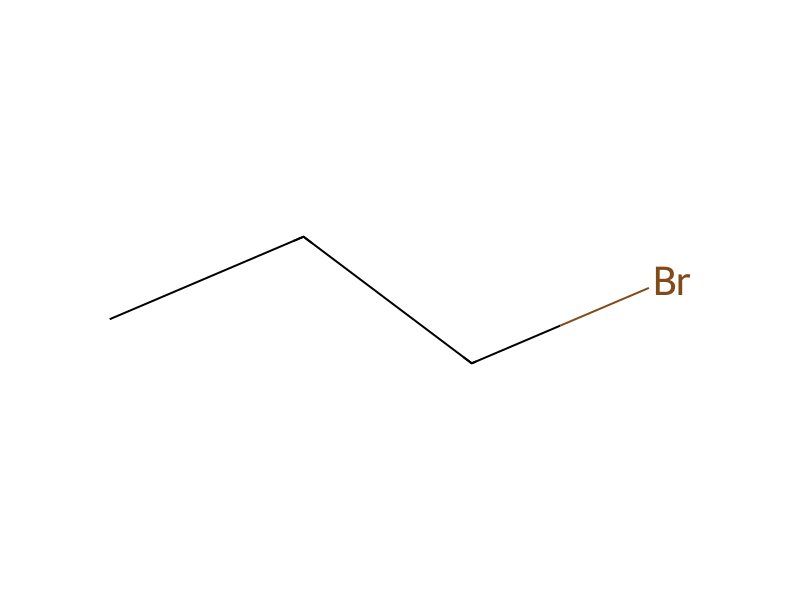


Product 1

Reagents, catalysts & solvents 1

Conditions
- Temperature
- 90 °C
Procedure
A mixture of 0.4 g (0.00187 moles) of 3-(1H-tetrazol-5-yl)-4-oxo-4H-pyrido[1,2-a]pyrimidine, 15 ml of dimethylformamide, 0.25 g (0.00187 moles) of anhydrous potassium carbonate and 0.34 ml (0.00374 moles) of propyl bromide was stirred at 90° C. for 1 hour. The hot dark brown solution was filtered, and the filtrate was evaporated. The dark brown oily residue, which is the mixture of the title compounds, started to crystallize. To the oily crystals 10 ml of ethanol were added, and the crystals were collected. 0.15 g (31.3%) of 3-(2-propyl-2H-tetrazol-5-yl)-4-oxo-4H-pyrido[1,2 -a]pyrimidine was obtained, in the form of pale-yellow crystals, m.p.: 115°-116° C.
Workup
- filtrationThe hot dark brown solution was filtered
- customthe filtrate was evaporated
- additionthe mixture of the title compounds
- customto crystallize
- additionTo the oily crystals 10 ml of ethanol were added
- customthe crystals were collected
Sources & evidence
- ORD record
- ord-60caeacbcae745d2b73080a0aeea5e6d
- Source dataset
- uspto-grants-1995_12
- Patent number
- US05475000
Reaction notes
Loading…