Sodium hydride → 4-[2-(1,3-Dioxo-1,3-dihydro-2H-isoindol-2-yl)ethoxy]benzaldehyde
Reaction equation

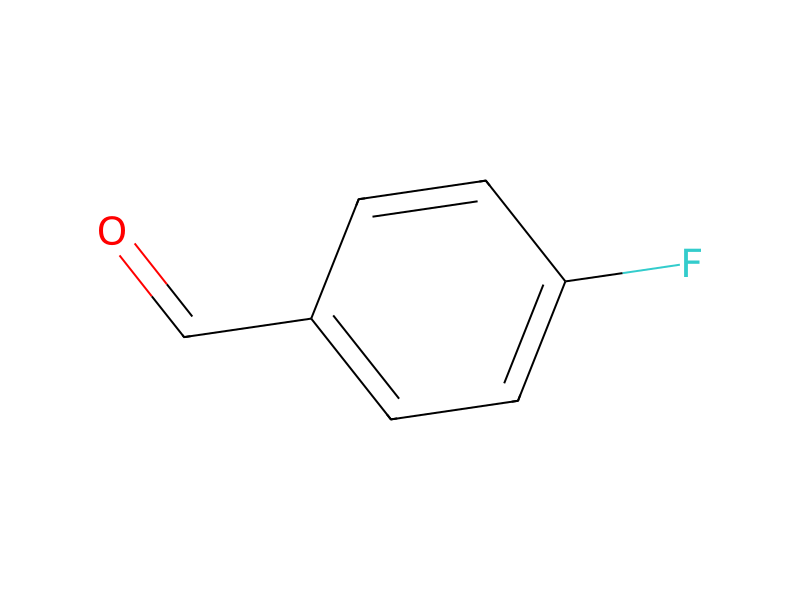
[H-].[Na+].[OH:3][CH2:4][CH2:5][N:6]1[C:10](=[O:11])[C:9]2=[CH:12][CH:13]=[CH:14][CH:15]=[C:8]2[C:7]1=[O:16].F[C:18]1[CH:25]=[CH:24][C:21]([CH:22]=[O:23])=[CH:20][CH:19]=1>CN(C)C=O>[C:10]1(=[O:11])[N:6]([CH2:5][CH2:4][O:3][C:18]2[CH:25]=[CH:24][C:21]([CH:22]=[O:23])=[CH:20][CH:19]=2)[C:7](=[O:16])[C:8]2=[CH:15][CH:14]=[CH:13][CH:12]=[C:9]12Participants
Reactant 3


Product 1

Reagents, catalysts & solvents 1

Procedure
Sodium hydride (60% dispersion in oil, 2 g) was added portionwise to a solution of N-(2-hydroxyethyl)phthalimide (9.6 g) in dry dimethylformamide (70 ml) at room temperature under a nitrogen atmosphere. The mixture was stirred at room temperature for 1 hour prior to the addition of 4-fluorobenzaldehyde (6.2 g, 5.3 ml), and the mixture then heated at 80° C. for 15 hours. The solvent was evaporated and the residue dissolved in water (100 ml) and extracted with ethyl acetate (2×100 ml). The combined ethyl acetate layers were washed with water (2×100 ml), brine (100 ml), dried (MgSO4) and evaporated to yield an oil. The oil was triturated with hexane, and the residue chromatographed on silica gel with 1.5% methanol in dichloromethane to afford the title compound mp 138° C.
Workup
- temperaturethe mixture then heated at 80° C. for 15 hours
- customThe solvent was evaporated
- dissolutionthe residue dissolved in water (100 ml)
- extractionextracted with ethyl acetate (2×100 ml)
- washThe combined ethyl acetate layers were washed with water (2×100 ml), brine (100 ml)
- dry with materialdried (MgSO4)
- customevaporated
- customto yield an oil
- customThe oil was triturated with hexane
- customthe residue chromatographed on silica gel with 1.5% methanol in dichloromethane
Sources & evidence
- ORD record
- ord-2507e38daf9c4197b7a0bd478082b058
- Source dataset
- uspto-grants-1995_12
- Patent number
- US05478850
Reaction notes
Loading…