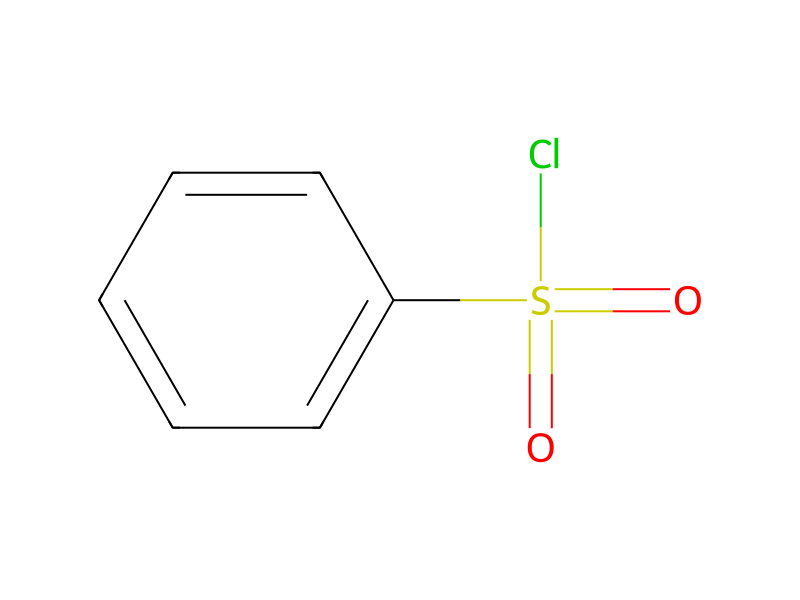
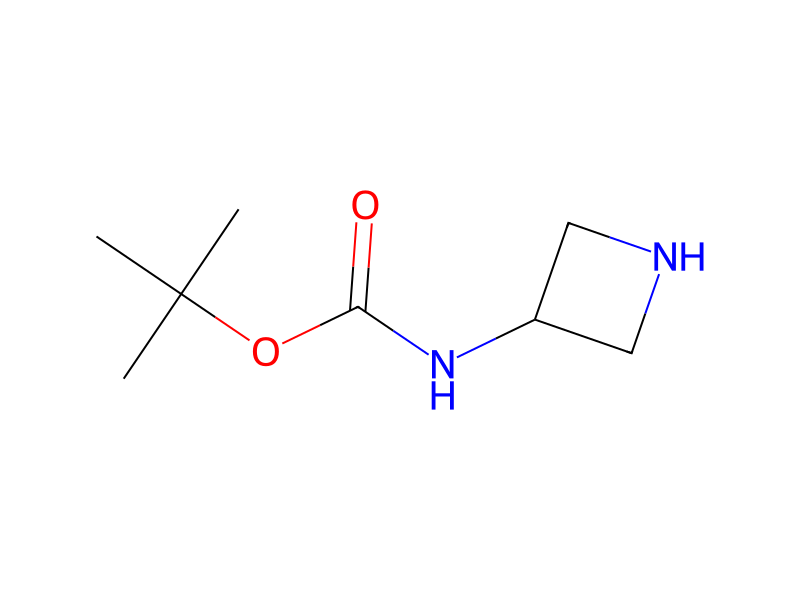
Benzenesulfonyl chloride → Tert-butyl 1-(phenylsulfonyl)azetidin-3-ylcarbamate
Reaction equation

[NH:1]1[CH2:4][CH:3]([NH:5][C:6](=[O:12])[O:7][C:8]([CH3:11])([CH3:10])[CH3:9])[CH2:2]1.C(N(CC)CC)C.[C:20]1([S:26](Cl)(=[O:28])=[O:27])[CH:25]=[CH:24][CH:23]=[CH:22][CH:21]=1.[Cl-].[NH4+]>ClCCl>[C:20]1([S:26]([N:1]2[CH2:4][CH:3]([NH:5][C:6](=[O:12])[O:7][C:8]([CH3:9])([CH3:11])[CH3:10])[CH2:2]2)(=[O:28])=[O:27])[CH:25]=[CH:24][CH:23]=[CH:22][CH:21]=1Participants




Procedure
To a stirred suspension of tert-butyl azetidin-3-ylcarbamate (4.61 g, contaminated with diphenylmethane 1:1, ˜13.39 mmoles) in dichloromethane (150 mL), was added triethylamine (3.73 mL, 26.77 mmoles) and benzenesulfonyl chloride (2.57 mL, 20.08 mmoles). The reaction was stirred at room temperature for ˜4 hours and became a solution. Sat. ammonium chloride was added to the mixture and the aqueous phase was extracted with dichloromethane (3×). The combined organic layers were dried over anhydrous magnesium sulphate, filtered and concentrated. The residue was precipitated from dichloromethane/hexanes 1:1 to give the title material (1.073 g, ˜26%) as a solid. The mother liquor was concentrated and the residue was purified on Biotage (0 to 20% acetonitrile in dichloromethane) to afford the title material (2.46 g, ˜58%). 1H NMR 400 MHz CDCl3 δ (ppm): 1.42 (9H, s), 3.60 (2H, br s), 4.06 (2H, dd, J=8.7 and 7.7 Hz), 4.35 (1H, br s), 4.70 (1H, br s), 7.60-7.64 (2H, m), 7.68-7.72 (1H, m), 7.86-7.88 (2H, m).
Workup
- extractionthe aqueous phase was extracted with dichloromethane (3×)
- dry with materialThe combined organic layers were dried over anhydrous magnesium sulphate
- filtrationfiltered
- concentrationconcentrated
- customThe residue was precipitated from dichloromethane/hexanes 1:1
Sources & evidence
- ORD record
- ord-5c0bc2ccca98462ebc09c949df8f2574
- Source dataset
- uspto-grants-2010_12
- Patent number
- US07851500B2
Reaction notes
Loading…