Sodium Hydroxide → Piperazine, 1-[(6-broMo-3-pyridinyl)Methyl]-4-ethyl-
Reaction equation

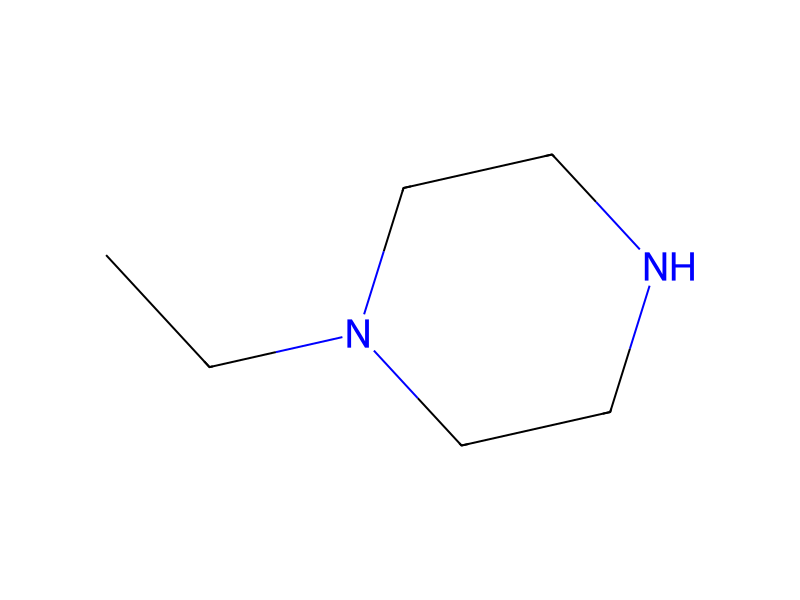
[CH2:1]([N:3]1[CH2:8][CH2:7][NH:6][CH2:5][CH2:4]1)[CH3:2].[Br:9][C:10]1[N:15]=[CH:14][C:13]([CH:16]=O)=[CH:12][CH:11]=1.C(O[BH-](OC(=O)C)OC(=O)C)(=O)C.[Na+].[OH-].[Na+]>C(Cl)Cl>[Br:9][C:10]1[N:15]=[CH:14][C:13]([CH2:16][N:6]2[CH2:7][CH2:8][N:3]([CH2:1][CH3:2])[CH2:4][CH2:5]2)=[CH:12][CH:11]=1Participants
6





Procedure
Add neat 1-ethylpiperazine (221.44 mL) to a mixture of 6-bromo-pyridine-3-carbaldehyde (300 g) and DCM (5000 mL). Then, add sodium triacetoxyborohydride (372.09 g) in portions and stir at RT for 12 h. Add DCM (1000 mL) and aqueous solution of sodium hydroxide 2 N (1500 mL). Separate the layers and extract twice the aqueous layer with DCM (600 mL). Combine the organic layers and remove the solvent under vacuum, add EA and evaporate to afford 451.3 g of the title compound. MS (ES+): m/z=285 (M+H)+.
Workup
- customSeparate the layers
- extractionextract twice the aqueous layer with DCM (600 mL)
- customCombine the organic layers and remove the solvent under vacuum
- additionadd EA
- customevaporate
Sources & evidence
- ORD record
- ord-6dbbec81435b4a2383206b4611f3a310
- Source dataset
- uspto-grants-2010_12
- Patent number
- US07855211B2
Reaction notes
Loading…