Sodium Hydroxide → Piperazine, 1-[(6-broMo-3-pyridinyl)Methyl]-4-ethyl-
Reaction equation

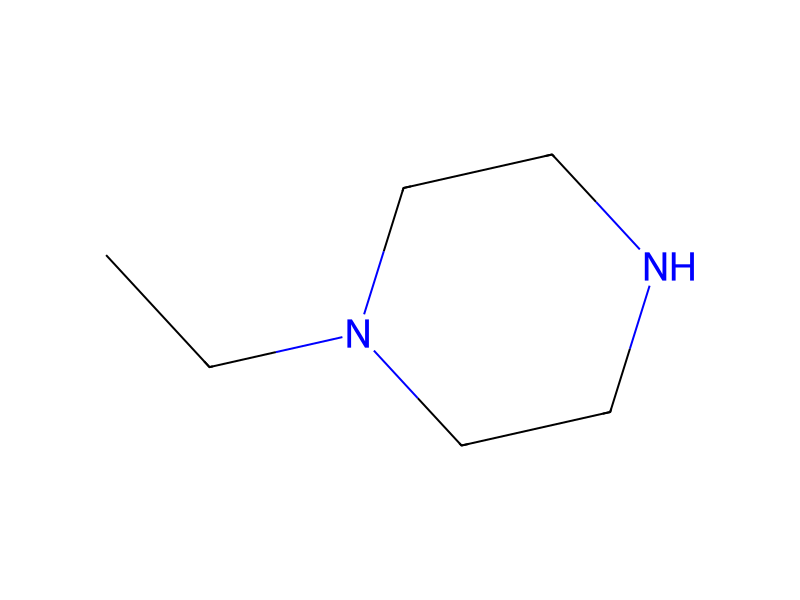
[CH2:1]([N:3]1[CH2:8][CH2:7][NH:6][CH2:5][CH2:4]1)[CH3:2].[Br:9][C:10]1[N:15]=[CH:14][C:13]([CH:16]=O)=[CH:12][CH:11]=1.C(O[BH-](OC(=O)C)OC(=O)C)(=O)C.[Na+].[OH-].[Na+]>C(Cl)Cl>[Br:9][C:10]1[N:15]=[CH:14][C:13]([CH2:16][N:6]2[CH2:7][CH2:8][N:3]([CH2:1][CH3:2])[CH2:4][CH2:5]2)=[CH:12][CH:11]=1Participants
6





Conditions
- Temperature
- 25 °C
Procedure
Add neat 1-ethylpiperazine (5.6 kg) to a mixture of 6-bromo-pyridine-3-carbaldehyde (8.3 kg) and DCM (186 kg). Then, add sodium triacetoxyborohydride (10.9 kg) in portions and stir at 20-30° C. for 12 h. Quench the reaction into a mixture of DCM (36 kg) and aqueous solution of sodium hydroxide 2 N (46 kg). Separate the layers and extract twice the aqueous layer with DCM (24×2 kg). Combine the organic layers, wash with brine (50×2 kg) and remove the solvent under vacuum to afford 11.5 kg of the title compound. MS (ES+): m/z=285 (M+H)+.
Workup
- customQuench
- customthe reaction
- customSeparate the layers
- extractionextract twice the aqueous layer with DCM (24×2 kg)
- washCombine the organic layers, wash with brine (50×2 kg)
- customremove the solvent under vacuum
Sources & evidence
- ORD record
- ord-25978f257a02499fbe085de19abb3c91
- Source dataset
- uspto-grants-2010_12
- Patent number
- US07855211B2
Reaction notes
Loading…