Sodium hydride → HCID 66671243, compound
Reaction equation

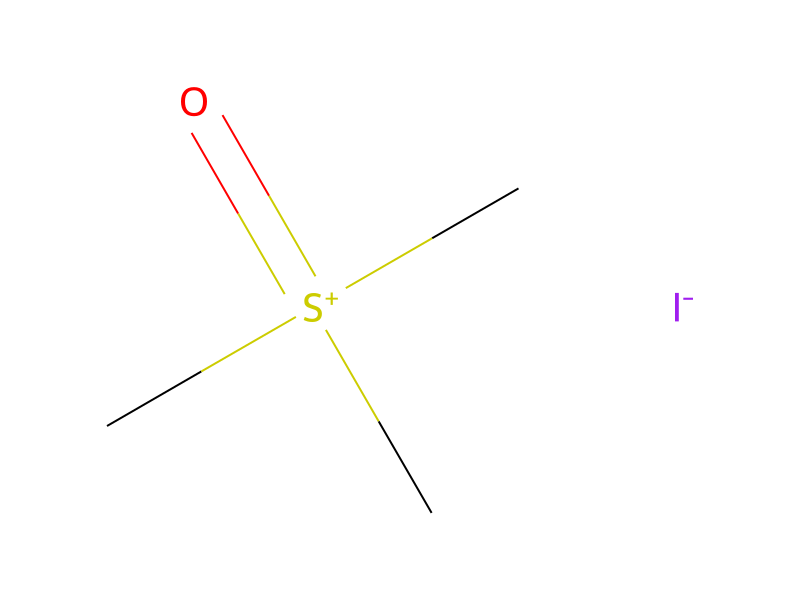
[H-].[Na+].[I-].[CH3:4][S+](C)(C)=O.[C:9]1([CH2:15][N:16]2[CH2:20][CH:19]=[C:18]([C:21]3[CH:26]=[CH:25][C:24]([C:27]([F:30])([F:29])[F:28])=[CH:23][N:22]=3)[CH2:17]2)[CH:14]=[CH:13][CH:12]=[CH:11][CH:10]=1.[Cl-].[NH4+]>CS(C)=O>[C:9]1([CH2:15][N:16]2[CH2:20][CH:19]3[C:18]([C:21]4[CH:26]=[CH:25][C:24]([C:27]([F:29])([F:30])[F:28])=[CH:23][N:22]=4)([CH2:4]3)[CH2:17]2)[CH:14]=[CH:13][CH:12]=[CH:11][CH:10]=1Participants





Procedure
To a slurry of sodium hydride (83 mg) and trimethylsulfoxonium iodide (0.46 g) DMSO (anhydrous, 3 mL) was added dropwise (gas evolution). The resulting mixture was allowed to stir at room temperature for 0.5 h. A solution of 2-[1-(phenylmethyl)-2,5-dihydro-1H-pyrrol-3-yl]-5-(trifluoromethyl)pyridine (330 mg) in DMSO (anhydrous, 6 mL) was added at room temperature. After 1 h a saturated solution of ammonium chloride (4 mL) was added and the mixture extracted with dichloromethane (2×10 mL). Volatiles from the organic phase were evaporated under reduced pressure, the residue charged onto an SCX column and eluted with MeOH followed by MeOH/NH3 0.25 M. The methanole/ammonia fractions were concentrated under reduced pressure to give 0.31 g of the title compound (y=89%).
Workup
- extractionthe mixture extracted with dichloromethane (2×10 mL)
- customVolatiles from the organic phase were evaporated under reduced pressure
- additionthe residue charged onto an SCX column
- washeluted with MeOH
- concentrationThe methanole/ammonia fractions were concentrated under reduced pressure
Sources & evidence
- ORD record
- ord-a8e8a7d038194e98bfc497d698dd6973
- Source dataset
- uspto-grants-2010_12
- Patent number
- US07855298B2
Reaction notes
Loading…