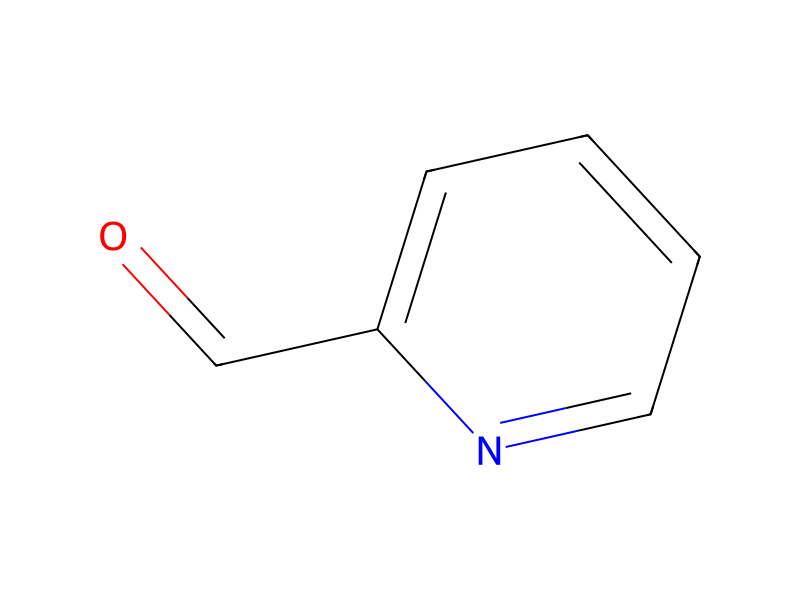
2-Pyridinecarboxaldehyde → HCID 22223215, compound
Reaction equation

[N:1]1C=CC=CC=1C=O.[C:9]([C:13]1[CH:18]=[CH:17][N:16]=[C:15]([C:19](=[CH2:23])[C:20]([OH:22])=[O:21])[CH:14]=1)([CH3:12])([CH3:11])[CH3:10]>>[C:9]([C:13]1[CH:18]=[CH:17][N:16]=[C:15]([C:19](=[CH2:23])[C:20]([OH:22])=[O:21])[CH:14]=1)([CH3:12])([CH3:11])[CH3:10].[N:16]1[CH:17]=[CH:18][CH:13]=[CH:14][C:15]=1[C:19](=[CH2:23])[C:20]([NH2:1])=[O:21]Participants
4


Procedure
The Scheme 3 shows a proposed process for synthesizing pyridinyl acrylic amide (16) with t-butyl group. Substituted pyridinecarboxaldehyde with t-butyl group (12) is prepared by reduction followed by radical substitution method (J. Heterocyclic Chem., 1989, 25, 45-48). Substituted nicotinic ester (10) is converted to corresponding pyridine-3-methanol (11). Pyridinyl-3-methanol is reacted with pivalic acid and silver nitrate to give pyridinecarboxaldehyde (12) via Tada's radical substitution. Compound (14) is synthesized from compound (12) with similar method of scheme 2. 4-t-Butylpyridinyl acrylic acid (14) is reacted with compound (15) to yield compound (16).
Sources & evidence
- ORD record
- ord-632d5f507cd4487daa0a2fa48d87ef41
- Source dataset
- uspto-grants-2010_12
- Patent number
- US07858621B2
Reaction notes
Loading…