Ammonia → 5-phenyl-1H-indole-7-carboxamide
Reaction equation

[C:1]1([C:7]2[CH:8]=[C:9]3[C:13](=[C:14]([C:16]([OH:18])=O)[CH:15]=2)[NH:12][CH:11]=[CH:10]3)[CH:6]=[CH:5][CH:4]=[CH:3][CH:2]=1.Cl.C[N:21](C)CCCN=C=NCC.O.ON1C2C=CC=CC=2N=N1.N>C(Cl)Cl.C1COCC1>[C:1]1([C:7]2[CH:8]=[C:9]3[C:13](=[C:14]([C:16]([NH2:21])=[O:18])[CH:15]=2)[NH:12][CH:11]=[CH:10]3)[CH:6]=[CH:5][CH:4]=[CH:3][CH:2]=1Participants
Reactant 4



Product 1

Reagents, catalysts & solvents 2


Procedure
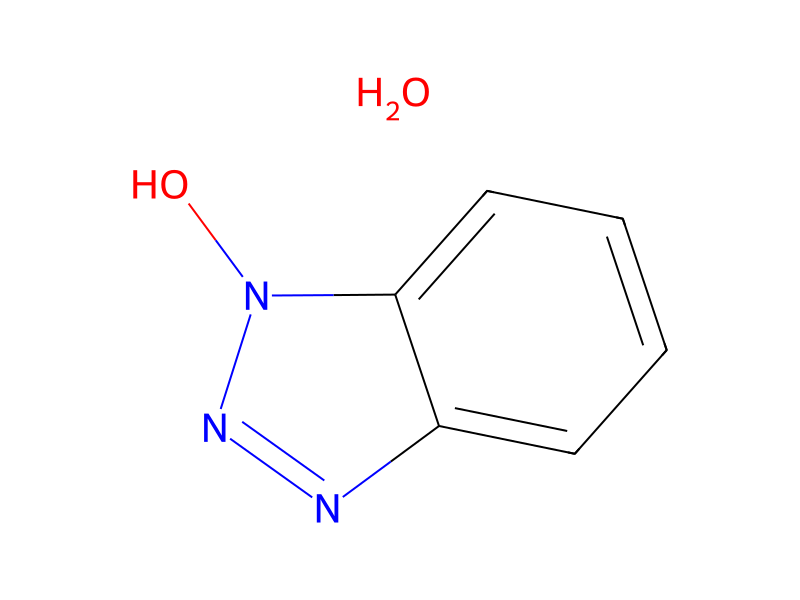
To a solution of 5-phenyl-1H-indole-7-carboxylic acid (10.0 g, 42.0 mmol) in a mixture of CH2Cl2 (100 mL) and THF (100 mL) at room temperature, N-(3-Dimethylaminopropy)-N′-ethylcarbodiimide hydrochloride (9.66 g, 50.4 mmol), 1-Hydroxybenzotriazole hydrate (6.81 g, 50.4 mmol) and ammonia (2 M in methanol, 168 mmol, 84 mL) were added. The reaction mixture was stirred at room temperature for 24 hours. All solvent were evaporated and the reaction mixture was partitioned between ethyl acetate (200 mL) and water (200 mL). The organic layer was separated and the aqueous layer was extracted with ethyl acetate (×2). The combined organic phase washed with brine, dried over Mg2SO4 and concentration to give the product which is pure enough for next reaction (10 g, 100%).
Workup
- customAll solvent were evaporated
- customthe reaction mixture was partitioned between ethyl acetate (200 mL) and water (200 mL)
- customThe organic layer was separated
- extractionthe aqueous layer was extracted with ethyl acetate (×2)
- washThe combined organic phase washed with brine
- dry with materialdried over Mg2SO4 and concentration
- customto give the product which
- customis pure enough for next reaction (10 g, 100%)
Sources & evidence
- ORD record
- ord-cc63054342f747f793d32db1e6e63336
- Source dataset
- uspto-grants-2010_12
- Patent number
- US07858796B2
Reaction notes
Loading…