gamma-Hexalactone → HEXANAMIDE, 4-HYDROXY-N-[(4-METHOXYPHENYL)METHYL]-
Reaction equation

[C:1]1(=[O:8])[O:7][CH:4]([CH2:5][CH3:6])[CH2:3][CH2:2]1.[CH3:9][O:10][C:11]1[CH:18]=[CH:17][C:14]([CH2:15][NH2:16])=[CH:13][CH:12]=1>C(OCC)(=O)C>[CH3:9][O:10][C:11]1[CH:18]=[CH:17][C:14]([CH2:15][NH:16][C:1](=[O:8])[CH2:2][CH2:3][CH:4]([OH:7])[CH2:5][CH3:6])=[CH:13][CH:12]=1Participants
Reactant 2

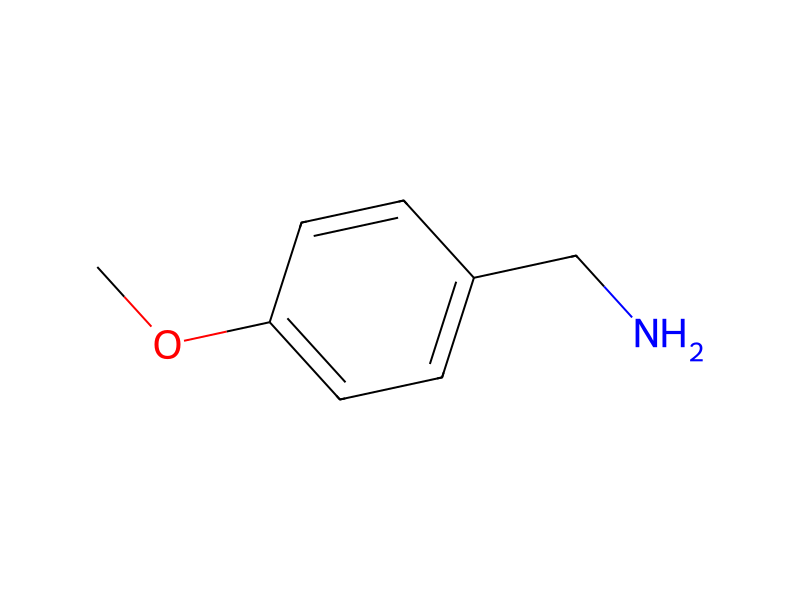
Product 1

Reagents, catalysts & solvents 1

Conditions
- Temperature
- 82.5 °C
Procedure
Gamma-caprolactone (28.745 Kg, 251.8 moles) and 4-methoxybenzylamine (38.0 Kg, 277 moles) were placed in a 100 gallon glass lined tank. The solution was heated to 80-85° C. and held at that temperature for 16 hours. TLC on silica gel plates showed the reaction was complete. The TLC system comprised: ethyl acetate with detection at 254 nm. Ethyl acetate (18 gal, 68 L) was slowly charged to the reaction pot after cooling to 60° C. Hexanes (a total of 18 gal, 68 L) were added until a haze was achieved. After ½ hour, to allow crystallization to start, the remainder of the hexanes was added. The slurry was cooled to 25° C. and granulated for 3 hours. The solid was collected by filtration and washed with a 1:1 mixture of ethyl acetate and hexanes. The wet cake was vacuum dried with no additional heat to produce 46.05 Kg (72.8%) of the desired amide; mp 81-82° C.
Workup
- temperatureafter cooling to 60° C
- waitAfter ½ hour
- customcrystallization
- additionthe remainder of the hexanes was added
- temperatureThe slurry was cooled to 25° C.
- waitgranulated for 3 hours
- filtrationThe solid was collected by filtration
- washwashed with a 1:1 mixture of ethyl acetate and hexanes
- customdried with
- temperatureno additional heat
Sources & evidence
- ORD record
- ord-b2fa1f3582a34219a27bb86145801bcc
- Source dataset
- uspto-grants-2001_12
- Patent number
- US06326495B2
Reaction notes
Loading…