2,6-Lutidine → 3-(4-chloro-3-fluorophenyl)-N-cyclopropyl-3H-imidazo[4,5-b]pyridine-2-carboxamide
Reaction equation

[Cl:1][C:2]1[CH:7]=[CH:6][C:5]([NH:8][C:9]2[C:14]([NH2:15])=[CH:13][CH:12]=[CH:11][N:10]=2)=[CH:4][C:3]=1[F:16].[CH:17]1([NH:20][C:21](=[O:25])[C:22](O)=O)[CH2:19][CH2:18]1.CC1C=CC=C(C)N=1.C(P1(=O)OP(=O)(CCC)OP(=O)(CCC)O1)CC>CC1CCCO1>[Cl:1][C:2]1[CH:7]=[CH:6][C:5]([N:8]2[C:9]3=[N:10][CH:11]=[CH:12][CH:13]=[C:14]3[N:15]=[C:22]2[C:21]([NH:20][CH:17]2[CH2:19][CH2:18]2)=[O:25])=[CH:4][C:3]=1[F:16]Participants
Reactant 4


Product 1

Reagents, catalysts & solvents 1
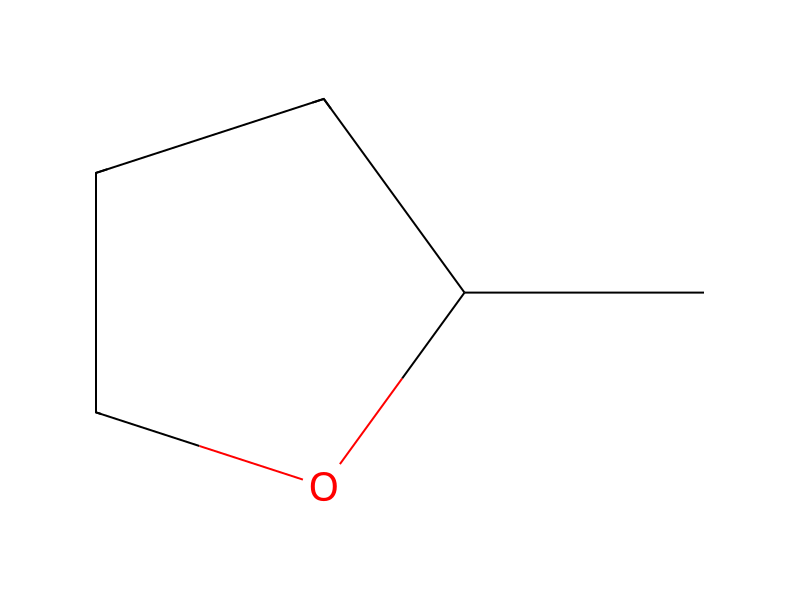
Conditions
- Temperature
- -10 °C
Procedure
A mixture of the mono-tosylate salt of N2-(4-chloro-3-fluorophenyl)pyridine-2,3-diamine (C12) [prepared via treatment of C12 with p-toluenesulfonic acid monohydrate (1.5 equivalents) in ethanol at 80° C., followed by cooling to room temperature and isolation via filtration] (1.003 g, 2.447 mmol), (cyclopropylamino)(oxo)acetic acid (P2) (0.304 g, 2.35 mmol), 2,6-dimethylpyridine (0.91 mL, 0.84 g, 7.8 mmol), and 2-methyltetrahydrofuran (10 mL) was cooled to −10° C. and treated with 2,4,6-tripropyl-1,3,5,2,4,6-trioxatriphosphinane 2,4,6-trioxide (50 weight % solution in ethyl acetate, 4.3 mL, 4.6 g, 7.2 mmol). The reaction mixture was warmed to 0° C. and held for 1 hour, heated at reflux for 20 hours, and then cooled to 0° C. and filtered, rinsing with 2-methyltetrahydrofuran. The filtrate was sequentially washed with water (10 mL, 5 mL), with aqueous ammonium hydroxide solution (15%, 3×5 mL), with aqueous hydrochloric acid (0.1 M, 10 mL, 5 mL), and with water (10 mL). The organic layer was distilled to a volume of approximately 4 mL, diluted with 2-nnethyltetrahydrofuran (13 mL), and again distilled to approximately 4 mL, whereupon it was cooled to 50° C. and treated with heptane (3 mL). The resulting slurry was stirred at 50° C. for 2 hours, cooled to 20° C., and stirred for 12 hours. The solid was collected via filtration and washed with a mixture of heptane and 2-methyltetrahydrofuran (2:1, 5 mL). The resulting material (0.488 g) was reslurried in a mixture of 2-propanol and ethyl acetate (9:1, 4.9 mL), warmed to 40° C., cooled to 20° C., and stirred for 16 hours. Filtration and washing with 2-propanol (3 mL) afforded the product as an off-white solid. Yield: 410 mg, 1.24 mmol, 53%. LCMS m/z 330.9, 332.9 [M+H]+. 1H NMR (400 MHz, DMSO-d6) δ 9.17 (d, J=4.8 Hz, 1H), 8.45 (d, J=4.5 Hz, 1H), 8.27 (d, J=8.0 Hz, 1H), 7.71-7.80 (m, 2H), 7.47 (dd, J=8.0, 4.8 Hz, 1H), 7.40 (br d, J=8.5 Hz, 1H), 2.77-2.86 (m, 1H), 0.65-0.69 (m, 4H).
Workup
- temperatureThe reaction mixture was warmed to 0° C.
- temperatureheated
- temperatureat reflux for 20 hours
- temperaturecooled to 0° C.
- filtrationfiltered
- washrinsing with 2-methyltetrahydrofuran
- washThe filtrate was sequentially washed with water (10 mL, 5 mL), with aqueous ammonium hydroxide solution (15%, 3×5 mL), with aqueous hydrochloric acid (0.1 M, 10 mL, 5 mL)
- distillationThe organic layer was distilled to a volume of approximately 4 mL
- additiondiluted with 2-nnethyltetrahydrofuran (13 mL)
- distillationagain distilled to approximately 4 mL, whereupon it
- temperaturewas cooled to 50° C.
- additiontreated with heptane (3 mL)
- temperaturecooled to 20° C.
- stirringstirred for 12 hours
- filtrationThe solid was collected via filtration
- washwashed with a mixture of heptane and 2-methyltetrahydrofuran (2:1, 5 mL)
- additionThe resulting material (0.488 g) was reslurried in a mixture of 2-propanol and ethyl acetate (9:1, 4.9 mL)
- temperaturewarmed to 40° C.
- temperaturecooled to 20° C.
- stirringstirred for 16 hours
- filtrationFiltration
- washwashing with 2-propanol (3 mL)
Sources & evidence
- ORD record
- ord-c47274aea1154213ab69f6bdc37def13
- Source dataset
- uspto-grants-2015_09
- Patent number
- US09120788B2
Reaction notes
Loading…