Acetic Acid → HCID 71271712, compound
Reaction equation

[C:1]1([NH2:8])[CH:6]=[CH:5][CH:4]=[CH:3][C:2]=1[NH2:7].CCN(C(C)C)C(C)C.Br[CH2:19][C:20]([C:22]1[CH:23]=[C:24]([CH:29]=[CH:30][CH:31]=1)[C:25]([O:27][CH3:28])=[O:26])=O.C(O)(=O)C.C(O[BH-](OC(=O)C)OC(=O)C)(=O)C.[Na+]>CC#N>[NH:7]1[C:2]2[C:1](=[CH:6][CH:5]=[CH:4][CH:3]=2)[NH:8][CH2:19][CH:20]1[C:22]1[CH:23]=[C:24]([CH:29]=[CH:30][CH:31]=1)[C:25]([O:27][CH3:28])=[O:26]Participants
7






Procedure
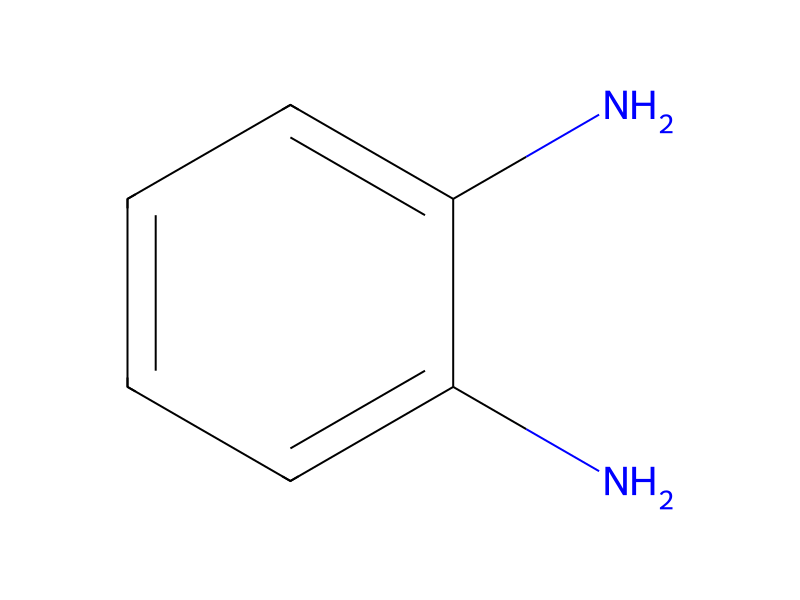
1,2-phenylenediamine (300 mg, 2.77 mmol) was dissolved in 2.7 mL MeCN. Hunig's Base (485 μl, 2.77 mmol) was added, followed by methyl 3-(2-bromoacetyl)benzoate (713 mg, 2.77 mmol). The resulting reaction mixture was stirred at room temperature for 30 minutes. Acetic acid (476 μl, 8.32 mmol) and sodium triacetoxyborohydride (1176 mg, 5.55 mmol) were added. The mixture was stirred at r.t. overnight. TLC indicated that the starting material was consumed, and the reaction was quenched with saturated ammonium chloride and extracted into DCM. The organic phase was dried with MgSO4, filtered, concentrated, and purified on a 100 g silica column with 0-30% EtOAc/hexanes gradient to give methyl 3-(1,2,3,4-tetrahydroquinoxalin-2-yl)benzoate.
Workup
- customThe resulting reaction mixture
- stirringThe mixture was stirred at r.t. overnight
- customwas consumed
- customthe reaction was quenched with saturated ammonium chloride
- extractionextracted into DCM
- dry with materialThe organic phase was dried with MgSO4
- filtrationfiltered
- concentrationconcentrated
- custompurified on a 100 g silica column with 0-30% EtOAc/hexanes gradient
Sources & evidence
- ORD record
- ord-0d59b828955545cc86ee45fb00f9a283
- Source dataset
- uspto-grants-2015_09
- Patent number
- US09126976B2
Reaction notes
Loading…