4-Bromoaniline → Acridine, 2,9-diamino-
Reaction equation

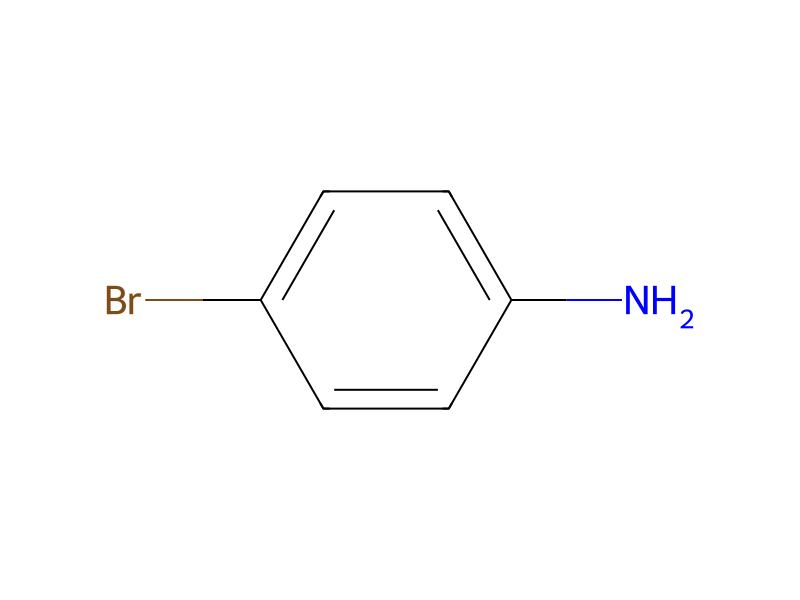
[NH2:1][C:2]1[C:3]2[C:8]([N:9]=[C:10]3[C:15]=1[CH:14]=[C:13](CCC(O)=O)[CH:12]=[CH:11]3)=[CH:7][CH:6]=[CH:5][CH:4]=2.BrC1C=CC([NH2:26])=CC=1.O=P(Cl)(Cl)Cl>>[NH2:26][C:13]1[CH:12]=[CH:11][C:10]2[C:15](=[C:2]([NH2:1])[C:3]3[C:8]([N:9]=2)=[CH:7][CH:6]=[CH:5][CH:4]=3)[CH:14]=1Participants
4



Procedure
Ullmann reaction (Step 1) of 2-chlorobenzoic acid 1 and 4-bromoaniline 2 afforded 4′-bromodiphenylamine-2-carboxylic acid 3. Cyclisation with POCl3 followed by amination gave the expected 3-bromo-9-aminoacridine 5 in good yield and purity.
Sources & evidence
- ORD record
- ord-5e7fb896412b42a0a38279209d9cacd2
- Source dataset
- uspto-grants-2015_09
- Patent number
- US09127164B2
Reaction notes
Loading…