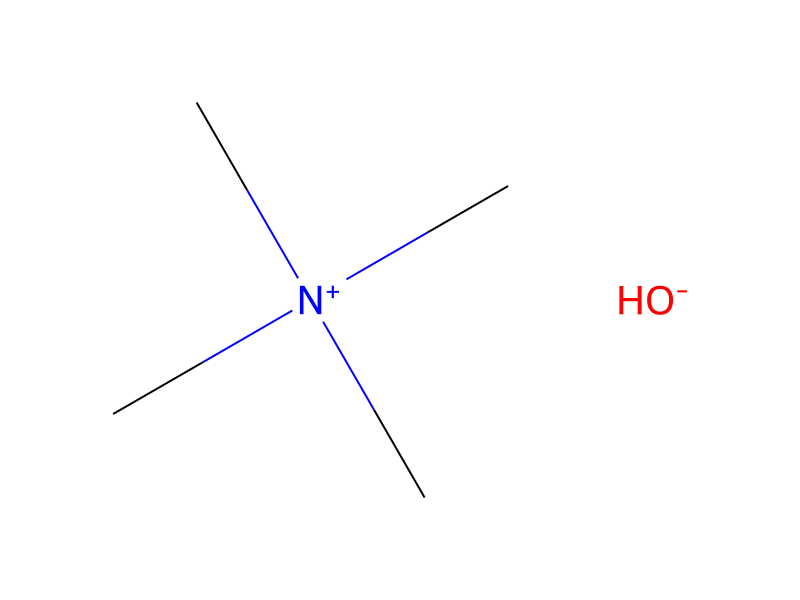
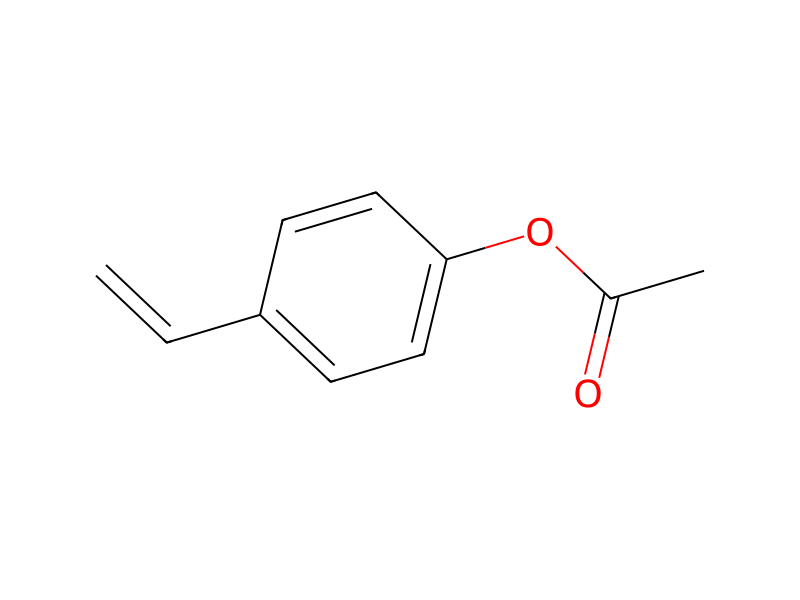
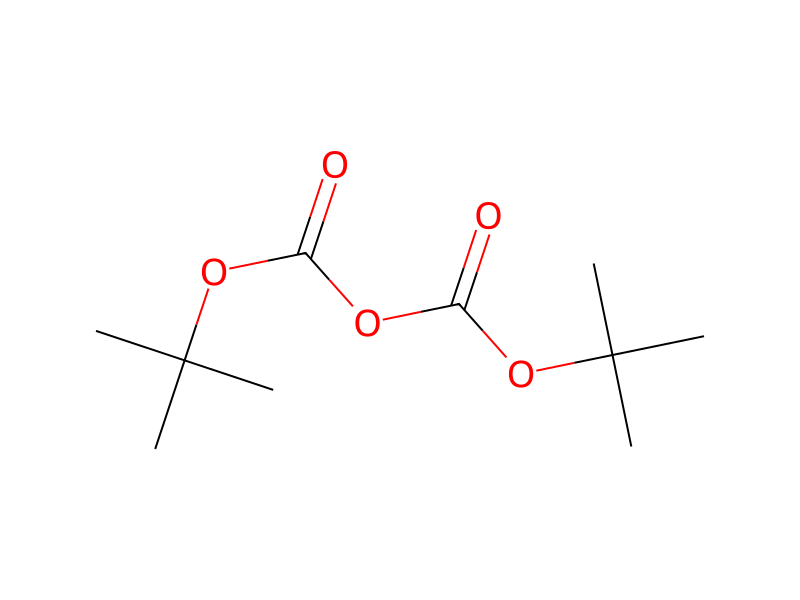
Tetramethylammonium hydroxide → 1,1-Dimethylethyl 4-ethenylphenyl carbonate
Reaction equation

C(OC1[CH:12]=[CH:11][C:8]([CH:9]=[CH2:10])=[CH:7][CH:6]=1)(=O)C.C(O[C:18]([O:20][C:21]([O:23][C:24]([CH3:27])([CH3:26])[CH3:25])=[O:22])=O)(C)(C)C.[OH-].C[N+](C)(C)C>>[C:24]([O:23][C:21]([O:20][C:18]1[CH:10]=[CH:9][C:8]([CH:11]=[CH2:12])=[CH:7][CH:6]=1)=[O:22])([CH3:25])([CH3:26])[CH3:27]Participants
4

Procedure
To a single neck 250 ml round bottom were added 10.0 g (0.617 moles) of 4-acetoxystyrene, 13.46 g (0.617 moles) of di-t-butyldicarbonate and 52 ml (15% mole excess) of a 25 weight % solution of tetramethylammonium hydroxide and the resulting reaction mixture was stirred under nitrogen at room temperature for about 18 hours. The reaction mixture was extracted twice with ether (50 ml) and washed once with a 25 weight % solution of tetramethylammonium hydroxide (50 ml) and then twice with water (50 ml). The organic products were dried over magnesium sulfate and evaporated to dryness leaving a clear colorless oil (12.16 g, 90% yield).
Workup
- customthe resulting reaction mixture
- extractionThe reaction mixture was extracted twice with ether (50 ml)
- washwashed once with a 25 weight % solution of tetramethylammonium hydroxide (50 ml)
- dry with materialThe organic products were dried over magnesium sulfate
- customevaporated to dryness
Sources & evidence
- ORD record
- ord-ff6a99f35f3b45839be95740f6b332d4
- Source dataset
- uspto-grants-2015_09
- Patent number
- US09128378B2
Reaction notes
Loading…