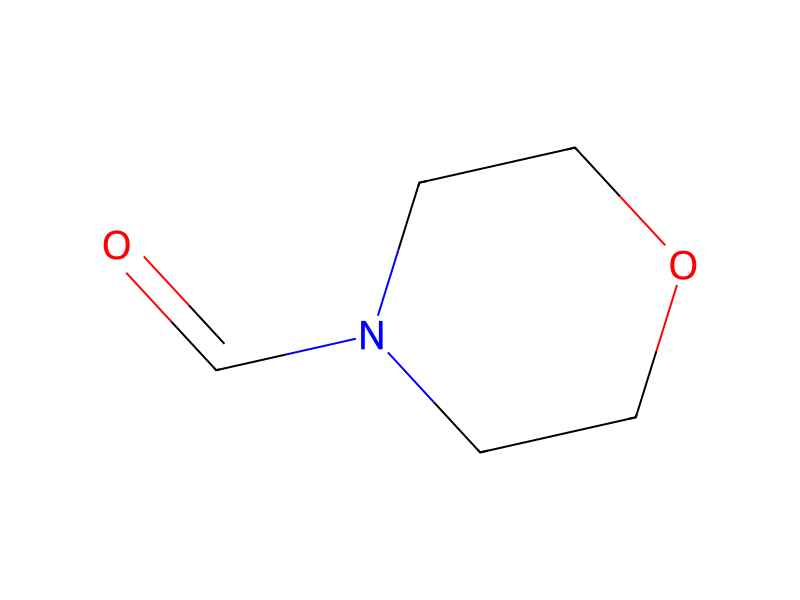
N-Formylmorpholine → HCID 86728493, compound
Reaction equation

[C:1]([NH:4][C:5]1[C:10]([F:11])=[CH:9][C:8]([Cl:12])=[CH:7][N:6]=1)(=[O:3])[CH3:2].[CH:13](N1CCOCC1)=[O:14]>C1COCC1>[C:1]([NH:4][C:5]1[C:10]([F:11])=[C:9]([CH:13]=[O:14])[C:8]([Cl:12])=[CH:7][N:6]=1)(=[O:3])[CH3:2]Participants
4
Reactant 2

Product 1

Reagents, catalysts & solvents 1

Conditions
- Temperature
- -20 °C
Procedure
Under a nitrogen atmosphere, 2-acetylamino-5-chloro-3-fluoropyridine (20 mg, 0.11 mmol) and 4-formylmorpholine (64 μL, 0.64 mmol) were dissolved in THF (0.2 mL) at room temperature. The solution was cooled to −20° C., a 1.0 M lithium hexamethyldisilazide THF solution (244 μL, 0.24 mmol) was added dropwise, and the mixture was stirred for 2 hours at that temperature. The reaction mixture was subjected to HPLC analysis under the following conditions, and the purity and conversion rate were calculated from the area ratio of the title compound and the starting compound (2-acetylamino-5-chloro-3-fluoropyridine). The formula used was: Conversion rate (%)=100−(area ratio of starting compound).
Sources & evidence
- ORD record
- ord-f21c04af6e004e5cacc7373c8839d332
- Source dataset
- uspto-grants-2015_09
- Patent number
- US09133174B2
Reaction notes
Loading…