(+-)-3-Quinuclidinol → 4-Nitrophenyl quinuclidin-3-yl carbonate
Reaction equation

[N:1]12[CH2:8][CH2:7][CH:4]([CH2:5][CH2:6]1)[CH:3]([OH:9])[CH2:2]2.Cl[C:11]([O:13][C:14]1[CH:19]=[CH:18][C:17]([N+:20]([O-:22])=[O:21])=[CH:16][CH:15]=1)=[O:12]>C1COCC1>[C:11](=[O:12])([O:9][CH:3]1[CH:4]2[CH2:7][CH2:8][N:1]([CH2:6][CH2:5]2)[CH2:2]1)[O:13][C:14]1[CH:15]=[CH:16][C:17]([N+:20]([O-:22])=[O:21])=[CH:18][CH:19]=1Participants
4
Reactant 2

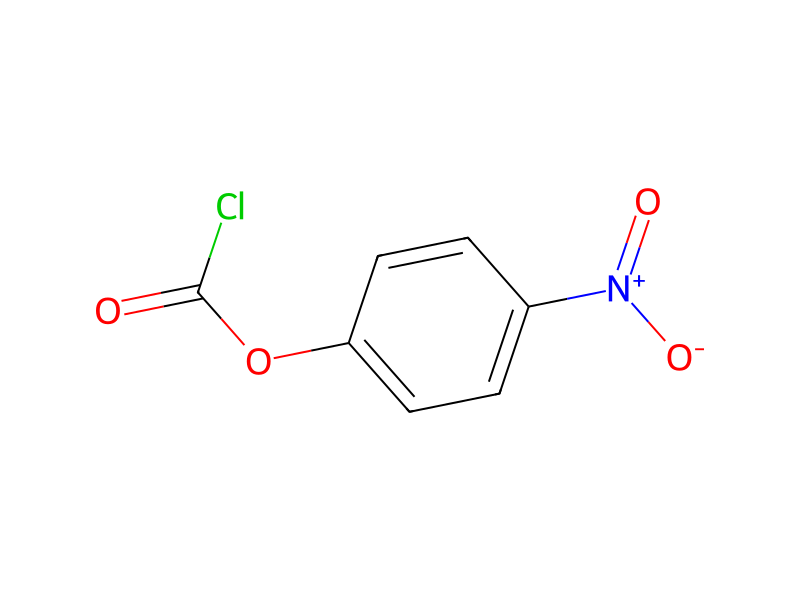
Product 1

Reagents, catalysts & solvents 1

Procedure
To a stirred solution of 3-quinuclidinol (3.00 g, 23.6 mmol) in THF (100 mL) was added 4-nitrophenyl chloroformate (5.94 g, 29.5). After stirring for 4 hours, the precipitate was filtered off, rinsed with THF and air dried on the frit under house vacuum. The filtercake was dissolved in ethyl acetate (150 mL) and washed with aqueous NaHCO3 (1×150 mL) and water (2×150 mL). The organic layer was dried (Na2SO4) and concentrated to afford crude 4-nitrophenyl quinuclidin-3-yl carbonate product, which was used in the next step without purification.
Workup
- filtrationthe precipitate was filtered off
- washrinsed with THF and air
- customdried on the frit under house vacuum
- dissolutionThe filtercake was dissolved in ethyl acetate (150 mL)
- washwashed with aqueous NaHCO3 (1×150 mL) and water (2×150 mL)
- dry with materialThe organic layer was dried (Na2SO4)
- concentrationconcentrated
Sources & evidence
- ORD record
- ord-9234d7285b1942a8b341faa2db5a6d14
- Source dataset
- uspto-grants-2015_09
- Patent number
- US09139580B2
Reaction notes
Loading…