Hydrochloric Acid → HCID 619059, compound
Reaction equation

C([O:3][C:4](=[O:18])[CH2:5][CH:6]([C:10](=O)[C:11]1[CH:16]=[CH:15][CH:14]=[CH:13][CH:12]=1)[C:7]([CH3:9])=O)C.[C:19]1([NH:25][NH2:26])[CH:24]=[CH:23][CH:22]=[CH:21][CH:20]=1.Cl>C(O)CCC>[CH3:9][C:7]1[C:6]([CH2:5][C:4]([OH:3])=[O:18])=[C:10]([C:11]2[CH:12]=[CH:13][CH:14]=[CH:15][CH:16]=2)[N:25]([C:19]2[CH:24]=[CH:23][CH:22]=[CH:21][CH:20]=2)[N:26]=1Participants
Reactant 3

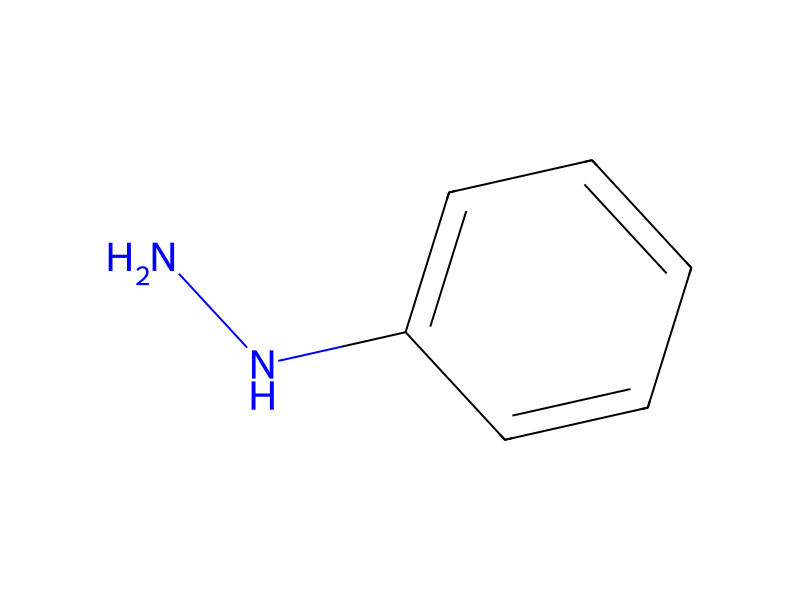

Product 1

Reagents, catalysts & solvents 1

Procedure
3.0 grams 3-benzoyl-levulinic acid-ethyl ester, 1.3 gram phenyl-hydrazine, 0.15 milliliter 2n aqueous hydrochloric acid and 25 milliliters n-butanol were mixed and the mixture heated to boiling temperature under reflux for 1.5 hour. The reaction mixture was evaporated in vacuo and benzene added to the residue. The benzene solution was adjusted to a pH of 4 and extracted with water. The benzene was evaporated from the solution, and 15 milliliters ethanol and 20 milliliters 1n aqueous sodium hydroxide were added to the residue and the mixture heated to the boiling temperature. The mixture was then worked up and the free acid recovered in accordance with the procedure set out in Example (1b). 3,3 grams 3-methyl-1,5-diphenyl-pyrazol-4-acetic acid, melting at 159°-161° C., were obtained representing a yield of 93%.
Workup
- temperaturethe mixture heated
- temperatureunder reflux for 1.5 hour
- customThe reaction mixture was evaporated in vacuo and benzene
- additionadded to the residue
- extractionextracted with water
- customThe benzene was evaporated from the solution, and 15 milliliters ethanol and 20 milliliters 1n aqueous sodium hydroxide
- additionwere added to the residue
- temperaturethe mixture heated to the boiling temperature
- customthe free acid recovered in accordance with the procedure
Sources & evidence
- ORD record
- ord-b1913b3f6f5e43ada4ed51cc5fdd2376
- Source dataset
- uspto-grants-1982_04
- Patent number
- US04325962
Reaction notes
Loading…