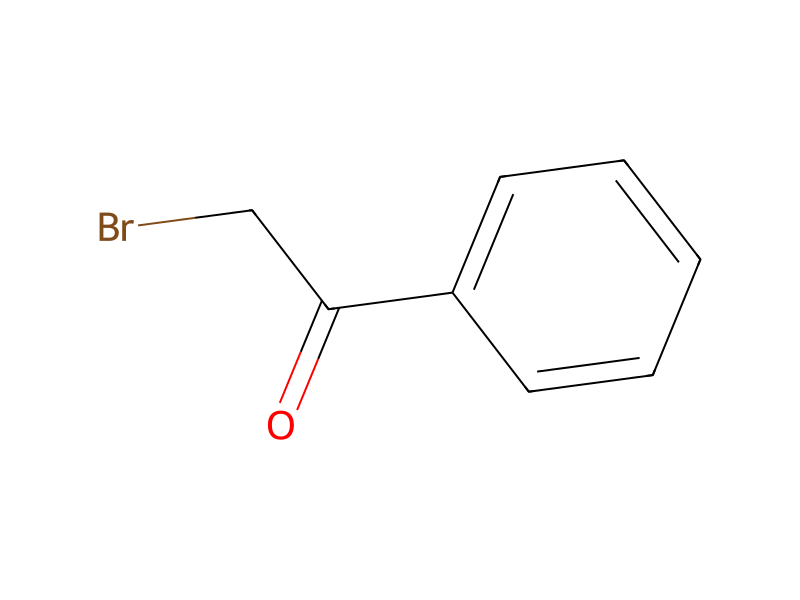
Phenacyl bromide → HCID 23463072, compound
Reaction equation

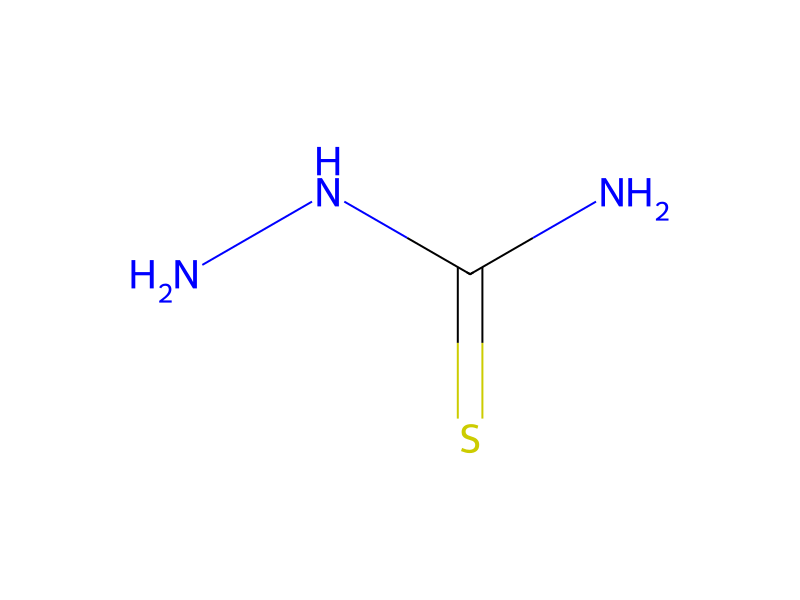
[NH2:1][C:2]1[S:3][C:4]([C:7]2[CH:12]=[CH:11][CH:10]=[CH:9][C:8]=2[Cl:13])=[N:5][N:6]=1.NNC(N)=S.ClC1C=CC=CC=1C(Cl)=O.Br[CH2:30][C:31]([C:33]1[CH:38]=[CH:37][CH:36]=[CH:35][CH:34]=1)=O>CN(C)C=O>[Cl:13][C:8]1[CH:9]=[CH:10][CH:11]=[CH:12][C:7]=1[C:4]1[S:3][C:2]2=[N:1][C:31]([C:33]3[CH:38]=[CH:37][CH:36]=[CH:35][CH:34]=3)=[CH:30][N:6]2[N:5]=1Participants
6




Procedure
10.5 g (0.05 mol) of 2-amino-5-(2-chlorophenyl)-1,3,4-thiadiazole, melting point 189,5° C. (prepared by reacting thiosemicarbazide with 2-chlorobenzoyl chloride) together with 10 g (0.05 mol) of bromoacetophenone are warmed to 120° C. in 100 ml of dimethylformamide for 3 hours and the mixture is then cooled and concentrated in a rotary evaporator. After digesting the residue with water, the digestion mixture is filtered and the residue is recrystallised from alcohol. A second fraction is obtained by concentrating the alcoholic mother liquor. A total yield of 12.5 g, corresponding to 80% of theory, of colourless crystals of melting point 126° C. is obtained.
Workup
- temperaturethe mixture is then cooled
- concentrationconcentrated in a rotary evaporator
- filtrationthe digestion mixture is filtered
- customthe residue is recrystallised from alcohol
- customA second fraction is obtained
- concentrationby concentrating the alcoholic mother liquor
- customA total yield of 12.5 g, corresponding to 80% of theory, of colourless crystals of melting point 126° C. is obtained
Sources & evidence
- ORD record
- ord-9f593c31b76e42e983b3e5a8b3cec8a0
- Source dataset
- uspto-grants-1981_05
- Patent number
- US04265898
Reaction notes
Loading…