Hydrochloric Acid → 2-(((5-Methyl-1H-imidazol-4-yl)methyl)thio)ethylamine dihydrochloride
Reaction equation

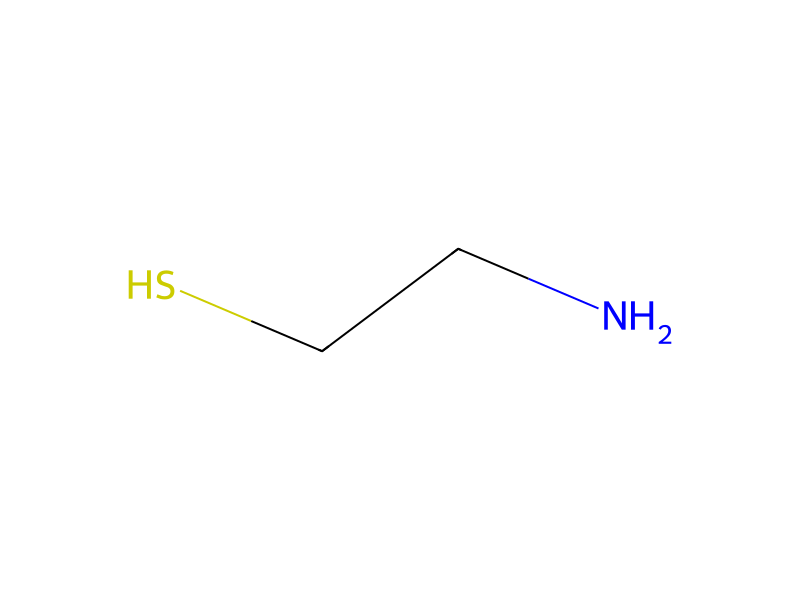
N[CH2:2][C:3]1[N:4]=[CH:5][NH:6][C:7]=1[CH3:8].[NH2:9][CH2:10][CH2:11][SH:12].[ClH:13]>C(O)(=O)C>[ClH:13].[ClH:13].[NH2:9][CH2:10][CH2:11][S:12][CH2:2][C:3]1[N:4]=[CH:5][NH:6][C:7]=1[CH3:8]Participants
5
Reactant 3


Product 1

Reagents, catalysts & solvents 1

Procedure
Sodium amide (0.39 g., 0.01 mole) was dissolved in 40 ml. of liquid ammonia and 4.11 g. (0.01 mole) of [(5-methylimidazolyl)-4-methyl]triphenylphosphonium bromide was added. The suspension was stirred at -40° C. for one hour and then allowed to warm to room temperature as the ammonia evaporated. The triphenyl phosphine was extracted from the residue with benzene and the remaining solids were taken up in water and extracted with chloroform. The chloroform extracts were dried and evaporated to give 4-aminomethyl-5-methylimidazole in 70% yield. This amine was refluxed with a molar equivalent of cysteamine in acetic acid and treated with hydrochloric acid to give 4-(2-aminoethyl)thiomethyl-5-methylimidazole dihydrochloride.
Sources & evidence
- ORD record
- ord-2d579656ebb248cf8df3410d570b8e90
- Source dataset
- uspto-grants-1981_05
- Patent number
- US04267337
Reaction notes
Loading…