Furfural → Formaldehyde
Reaction equation

[CH:1](=O)[C:2]1[O:6][CH:5]=CC=1.[CH2:8]([OH:13])[CH2:9][CH2:10][CH2:11][OH:12].C(O)(O)C#CC>>[CH:1]#[CH:2].[CH2:5]=[O:6].[CH2:8]([OH:13])[CH:9]=[CH:10][CH2:11][OH:12]Participants





Procedure
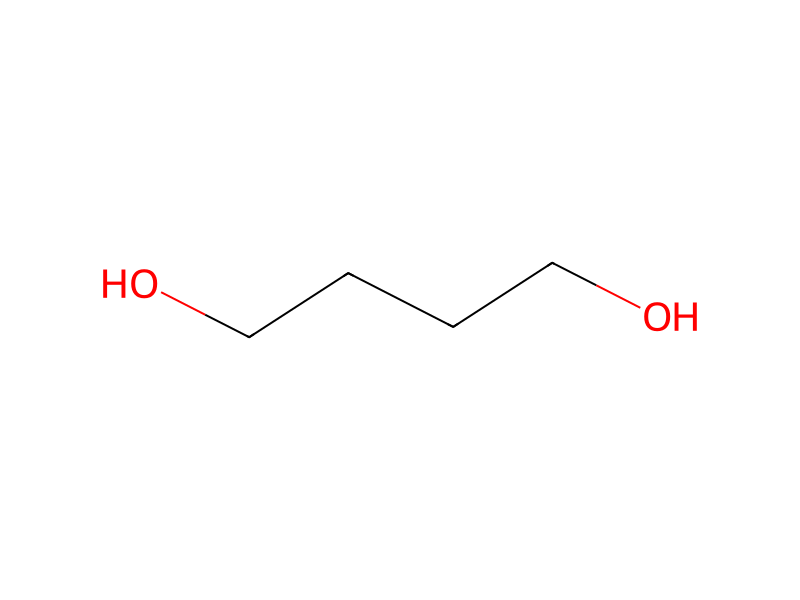
Tetrahydrofuran and 1,4-butanediol are both quite useful as organic solvents or as the starting materials for the production of high polymers, and they are manufactured by various processes. For example, it is known that tetrahydrofuran can be produced by the hydrogenation of furan obtained by decarbonylating furfural, or by the dehydrating cyclization of 1,4-butanediol obtainable by hydrogenating either butinediol which can be produced from acetylene and formaldehyde or 2-butene-1,4-diol which can be derived from 1,4-dichlorobutene, or by the hydrogenation of maleic anhydride, or by reacting the acetic ester of 1,4-butanediol with water in the presence of an acidic catalyst. It is also known that 1,4-butanediol can be produced by the hydrogenation of butinediol, or by the hydrolysis of the acetic ester of 1,4-butanediol, or by transesterification reaction of the acetic ester of 1,4-butanediol.
Workup
- customobtained
Sources & evidence
- ORD record
- ord-bd684d58cc9343e8954e3f2252aae900
- Source dataset
- uspto-grants-1981_05
- Patent number
- US04268447
Reaction notes
Loading…