Propanal → 2-Methyl-2-pentenal
Reaction equation

[CH:1](=[O:4])[CH2:2][CH3:3].[CH3:5][CH:6]([CH2:9][CH2:10][CH3:11])[CH:7]=[O:8]>C(O)CC>[CH3:3][C:2](=[CH:5][C:6]([CH3:7])=[CH:9][CH2:10][CH3:11])[CH:1]=[O:4].[CH3:3][C:2](=[CH:5][CH:6]([CH3:7])[CH2:9][CH2:10][CH3:11])[CH:1]=[O:4].[CH3:5][CH:6]([CH2:9][CH2:10][CH3:11])[CH2:7][OH:8].[CH3:3][C:2](=[CH:5][CH2:6][CH3:7])[CH:1]=[O:4]Participants
7
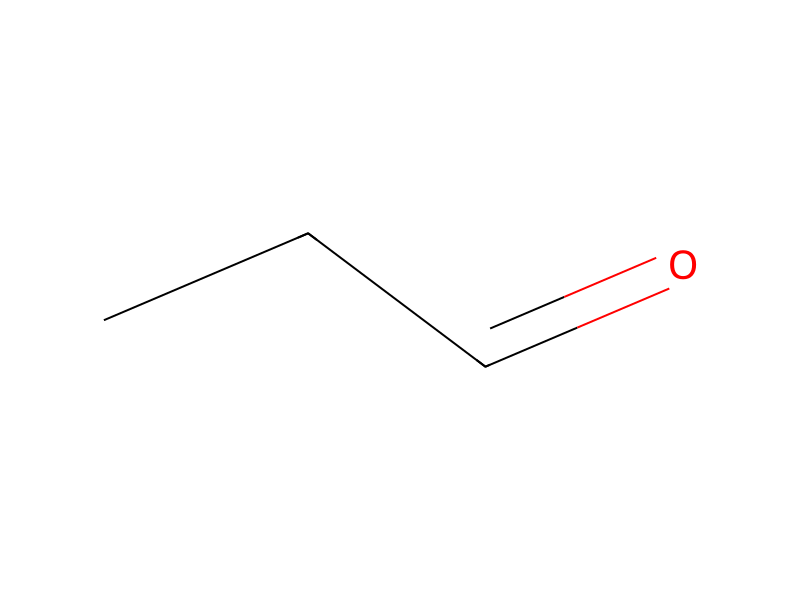



Procedure
Using a feed of 2.5 liters of propionaldehyde per hour, corresponding to a mean residence time of about 1.2 hours, a propionaldehyde conversion of 38% was achieved at 130° C. under a hydrogen pressure of 25 bar. The yield of 2-methylpentanal, based on the material converted, was 83%. In addition, 3% of propanol, 5% of a mixture of 2,4-dimethylhepta-2,4-dienal and 2,4-dimethylhept-2-enal, 0.5% of 2-methylpentanol and 4% of 2-methylpent-2-enal were formed. Since the last-mentioned compound can, if recycled to the synthesis, also be converted into 2-methylpentanal, the total yield of useful products was 87%.
Workup
- customcorresponding to a mean residence time of about 1.2 hours
- customwas achieved at 130° C. under a hydrogen
Sources & evidence
- ORD record
- ord-c0352ce5e27d430bbc0ab9165bb69e39
- Source dataset
- uspto-grants-1981_05
- Patent number
- US04270006
Reaction notes
Loading…