Trimethyl phosphite → 7-Bromo-6-methoxyisoquinoline
Reaction equation

[Br:1][C:2]1[CH:3]=[C:4]([CH:7]=[CH:8][C:9]=1[O:10][CH3:11])[CH:5]=O.CO[CH:14](OC)[CH2:15][NH2:16].ClC(OCC)=O.P(OC)(OC)OC.[OH-].[Na+]>C1C=CC=CC=1.[Ti](Cl)(Cl)(Cl)Cl>[Br:1][C:2]1[CH:3]=[C:4]2[C:7]([CH:14]=[CH:15][N:16]=[CH:5]2)=[CH:8][C:9]=1[O:10][CH3:11]Participants
Reactant 5
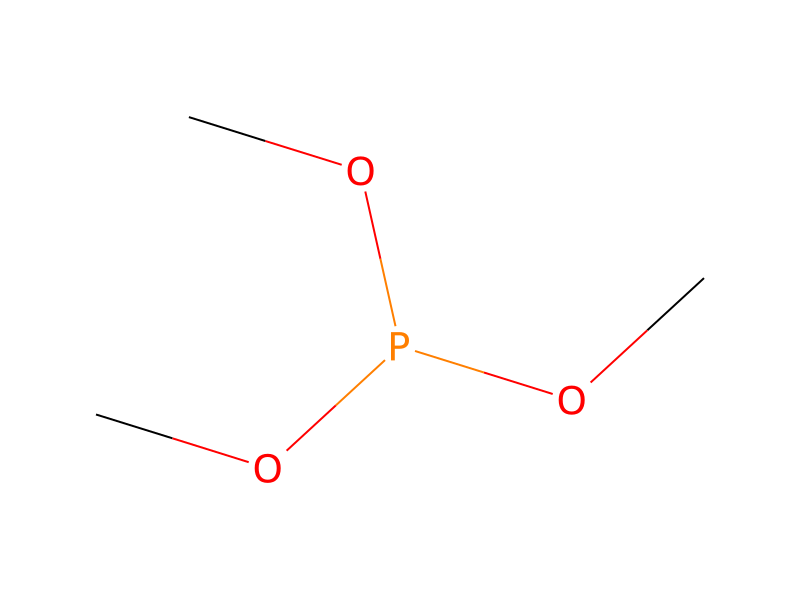




Product 1

Reagents, catalysts & solvents 2


Conditions
- Temperature
- -10 °C
Procedure
3-Bromo-4-methoxybenzaldehyde (10.0 g) was dissolved in benzene (100 ml) to prepare a solution. 2,2-Dimethoxy-ethylamine (4.89 g) was added to the solution, and the mixture was heated under reflux overnight. The solvent was removed by distillation under the reduced pressure, and the residue was then dissolved in tetrahydrofuran (100 ml) to prepare a solution which was then cooled to −10° C. Ethyl chloroformate (5.05 g) and trimethyl phosphite (6.92 g) were added thereto, and the mixture was stirred at room temperature overnight. The solvent was removed by distillation under the reduced pressure, the residue was then dissolved in dichloromethane (100 ml) to prepare a solution. Titanium tetrachloride (53.0 g) was added to the solution, and the mixture was heated under reflux for 36 hr. The reaction solution was cooled to room temperature, was then neutralized with a 1 N aqueous sodium hydroxide solution, and was extracted with 3 N hydrochloric acid. The aqueous layer was made basic with a 3 N aqueous sodium hydroxide solution, was then extracted with dichloromethane, and the solvent was removed by distillation under the reduced pressure to give 7-bromo-6-methoxyisoquinoline (2.90 g, yield 26%).
Workup
- customto prepare a solution
- temperaturethe mixture was heated
- temperatureunder reflux overnight
- customThe solvent was removed by distillation under the reduced pressure
- dissolutionthe residue was then dissolved in tetrahydrofuran (100 ml)
- customto prepare a solution which
- customThe solvent was removed by distillation under the reduced pressure
- dissolutionthe residue was then dissolved in dichloromethane (100 ml)
- customto prepare a solution
- temperaturethe mixture was heated
- temperatureunder reflux for 36 hr
- temperatureThe reaction solution was cooled to room temperature
- extractionwas extracted with 3 N hydrochloric acid
- extractionwas then extracted with dichloromethane
- customthe solvent was removed by distillation under the reduced pressure
Sources & evidence
- ORD record
- ord-de25ba9881644dd79fa32f2df0fad604
- Source dataset
- uspto-grants-2009_07
- Patent number
- US07560558B2
Reaction notes
Loading…