1,2-Dichloroethane → 4-(2-Chloro-ethoxy)-benzoic acid methyl ester
Reaction equation

[CH3:1][O:2][C:3](=[O:11])[C:4]1[CH:9]=[CH:8][C:7]([OH:10])=[CH:6][CH:5]=1.C(=O)([O-])[O-].[Cs+].[Cs+].CS(C)=O.[Cl:22][CH2:23][CH2:24]Cl>O>[CH3:1][O:2][C:3](=[O:11])[C:4]1[CH:9]=[CH:8][C:7]([O:10][CH2:24][CH2:23][Cl:22])=[CH:6][CH:5]=1Participants
Reactant 4


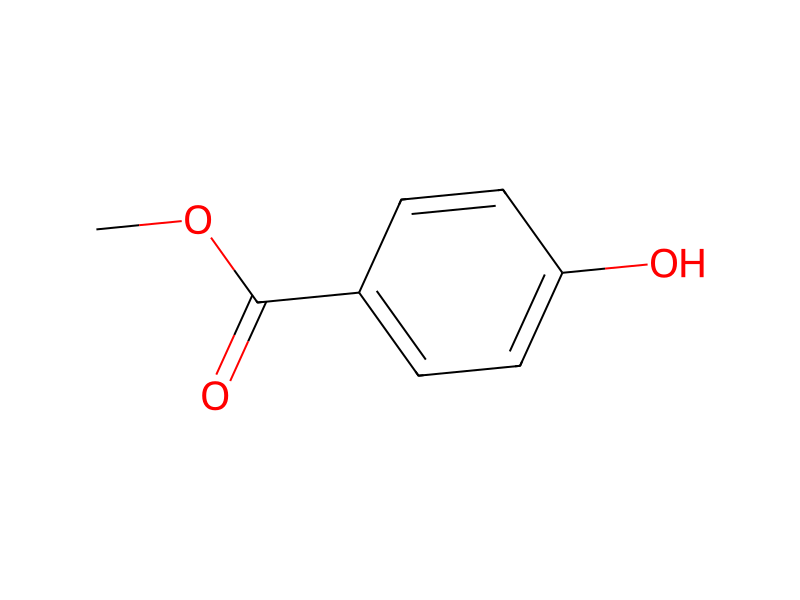

Product 1

Reagents, catalysts & solvents 1

Procedure
4-hydroxybenzoic acid methyl ester (1.52 g, 10 mmol), anhydrous cesium carbonate (3.26 g, 10 mmol), 5 ml of dimethylsulfoxide that is dried over 4A molecular sieve, and 15 ml 1,2-dichloroethane are combined and stirred at about room temperature. After 15 hours the mixture is heated to reflux and more cesium carbonate (about 1 more equivalent). HPLC shows the ratio of product to bis alkylated biproduct to starting material is 93.1:6.2: non-detectable. The reaction mixture is cooled to room temperature and diluted with 30 ml of water. The mixture is stirred then the layers separated. The aqueous layer is extracted with 15 ml of methylene chloride and then the combined organics are filtered through sodium sulfate. The filtrate is concentrated in vacuo at about 60° C. to a yellow green oil which solidifies on cooling to give 2.00 g of product. (94.8%). HPLC.
Workup
- temperatureAfter 15 hours the mixture is heated
- temperatureto reflux
- stirringThe mixture is stirred
- customthe layers separated
- extractionThe aqueous layer is extracted with 15 ml of methylene chloride
- filtrationthe combined organics are filtered through sodium sulfate
- concentrationThe filtrate is concentrated in vacuo at about 60° C. to a yellow green oil which
- temperatureon cooling
Sources & evidence
- ORD record
- ord-4f559474b12d4d5ea54bcdb7577e28dc
- Source dataset
- uspto-grants-2000_07
- Patent number
- US06090949
Reaction notes
Loading…