Acetophenone → 2,5-bis(2,2,2-trifluoroethoxy)benzoic Acid
Reaction equation

FC(F)(F)C[O:4]C1C=CC(OCC(F)(F)F)=CC=1.C[C:20]([C:22]1[CH:27]=[C:26]([O:28][CH2:29][C:30]([F:33])([F:32])[F:31])[CH:25]=[CH:24][C:23]=1[O:34][CH2:35][C:36]([F:39])([F:38])[F:37])=[O:21].C(C1C=CC=CC=1)(=O)C.Cl[O-]>>[F:37][C:36]([F:39])([F:38])[CH2:35][O:34][C:23]1[CH:24]=[CH:25][C:26]([O:28][CH2:29][C:30]([F:33])([F:32])[F:31])=[CH:27][C:22]=1[C:20]([OH:21])=[O:4]Participants

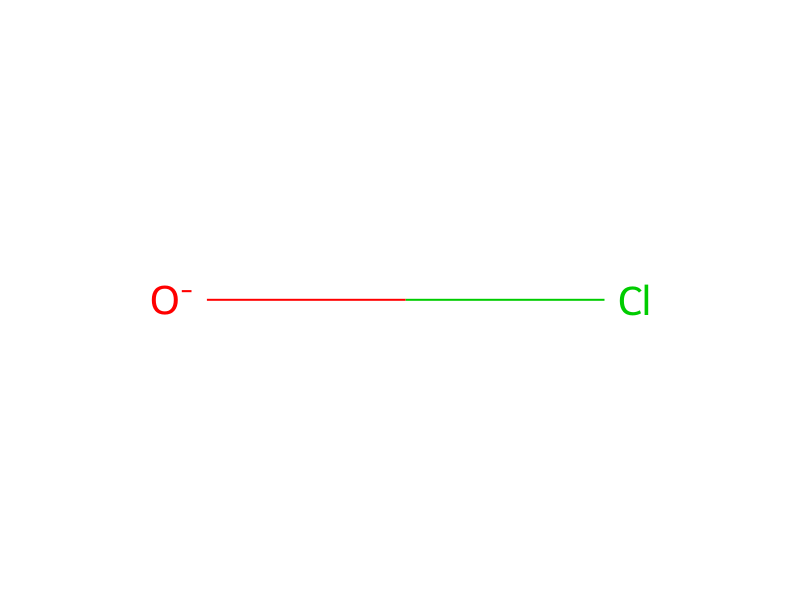


Procedure
In yet another aspect of the invention, a method of preparing a 2,5-bis(2,2,2-trifluoroethoxy)-N-(2-piperidylmethyl)benzamide is provided which comprises the following steps. The compound 1,4-dibromobenzene is contacted with an alkali metal 2,2,2-trifluoroethoxide in the presence of cuprous or cupric ion and in a strongly polar solvent comprising 2,2,2-trifluoroethanol to yield 1,4-bis(2,2,2-trifluoroethoxy)benzene. Then, in the presence of a Lewis acid catalyst, the 1,4-bis(2,2,2-trifluoroethoxy)benzene is treated with an acetylation agent under conditions to create 2,5-bis(2,2,2-trifluoroethoxy)acetophenone. The methyl moiety of the acetophenone function of the 2,5-bis(2,2,2-trifluoroethoxy)acetophenone is thereafter replaced using hypochlorite to yield 2,5-bis(2,2,2-trifluoroethoxy)benzoic acid. Subsequently, the 2,5-bis(2,2,2-trifluoroethoxy)benzoic acid is treated with an inorganic chloride to provide 2,5-bis(2,2,2-trifluoroethoxy)benzoic acid chloride. Finally, the resultant 2,5-bis(2,2,2-trifluoroethoxy)benzoic acid chloride is contacted with 2-aminomethylpiperidine, whereby there is formed 2,5-bis(2,2,2-trifluoroethoxy)-N-(2-piperidylmethyl)benzamide.
Sources & evidence
- ORD record
- ord-8c10637021f7427e9bf3a3b19dbb85d7
- Source dataset
- uspto-grants-1986_10
- Patent number
- US04617396
Reaction notes
Loading…