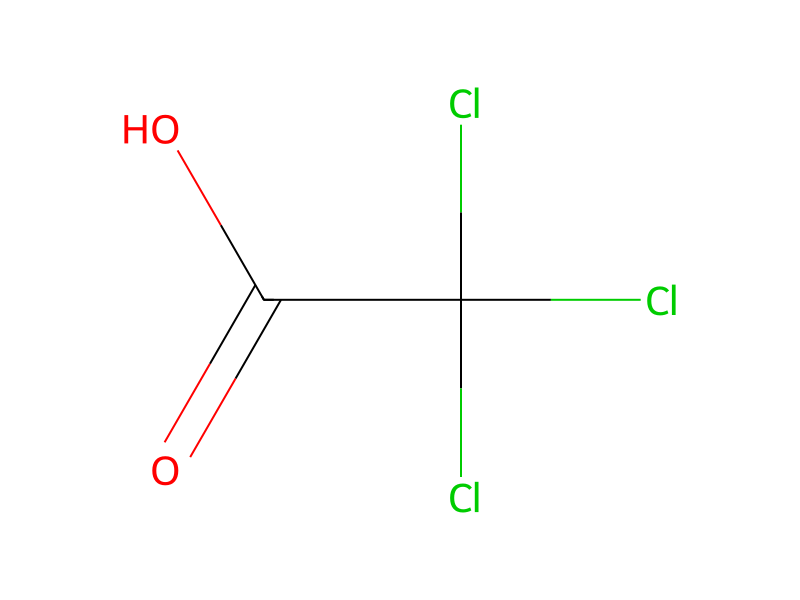
Trichloroacetic Acid → N-{2-[Bis(2-chloroethyl)amino]-2-oxo-1,3,2lambda~5~-oxazaphosphinan-4-yl}-N-hydroxymorpholine-4-carboxamide
Reaction equation

[CH2:1]1[CH:7](O)[NH:6][P:4]([N:9]([CH2:13][CH2:14][Cl:15])[CH2:10][CH2:11][Cl:12])(=[O:5])[O:3][CH2:2]1.[OH:16][NH:17][C:18]([N:20]1[CH2:25][CH2:24][O:23][CH2:22][CH2:21]1)=[O:19].ClC(Cl)(Cl)C(O)=O>CC(C)=O>[OH:16][N:17]([CH:7]1[CH2:1][CH2:2][O:3][P:4]([N:9]([CH2:13][CH2:14][Cl:15])[CH2:10][CH2:11][Cl:12])(=[O:5])[NH:6]1)[C:18]([N:20]1[CH2:25][CH2:24][O:23][CH2:22][CH2:21]1)=[O:19]Participants
5



Procedure
1.2 g (4.3 mmol) of 4-hydroxycyclophosphamide in 15 ml of acetone were treated with 630 mg (4.3 mmol) of N-hydroxymorpholino-carboxamide and a trace of trichloroacetic acid and stored at -25° C. After 4 days the crystals were drawn off by suction and recrystallized from acetone.
Workup
- customstored at -25° C
- customrecrystallized from acetone
Sources & evidence
- ORD record
- ord-b4b21d04e6124ccb902df70fb26abe8e
- Source dataset
- uspto-grants-1986_10
- Patent number
- US04618692
Reaction notes
Loading…