Cyclopropyl methyl ketone → HCID 54225680, compound
Reaction equation

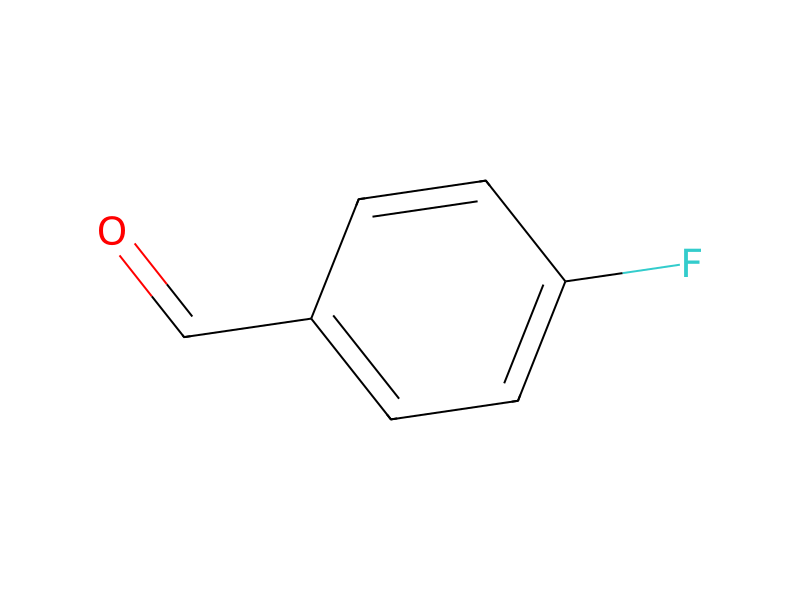
[F:1][C:2]1[CH:9]=[CH:8][C:5]([CH:6]=O)=[CH:4][CH:3]=1.[CH3:10][C:11]([CH:13]1[CH2:15][CH2:14]1)=[O:12].[O-]CC.[Na+]>C(O)C>[CH:13]1([C:11](=[O:12])[CH:10]=[CH:6][C:5]2[CH:8]=[CH:9][C:2]([F:1])=[CH:3][CH:4]=2)[CH2:15][CH2:14]1Participants
Reactant 3


Product 1

Reagents, catalysts & solvents 1

Procedure
A mixture of 4-fluorobenzaldehyde (9.30 g, 75.00 mmol, Aldrich) and cyclopropyl methyl ketone (6.30 g, 75.00 mmol) in absolute ethanol (100 ml) was treated with a solution of sodium ethoxide in ethanol (21% by weight solution; 2.79 ml, 7.50 mmol). After stirring for 2 hours at room temperature, additional 4-fluorobenzaldehyde was added (1.86 g, 15.00 mmol). The reaction mixture was stirred for 2 hours, concentrated to 1/3 volume and partitioned between 50% saturated NH4Ct/EtOAc (100 ml/250 ml). The layers were separated and the aqueous portion was extracted with EtOAc (twice) and the combined organics were washed with H2O (twice) and brine, dried (Na2SO4) and concentrated. The yellow oily residue was distilled (Vigroux column, bp 115°-120° C., 0.6 mm Hg) to afford the title compound as a colorless oil (12.8 g, 89.7%).
Workup
- stirringThe reaction mixture was stirred for 2 hours
- concentrationconcentrated to 1/3 volume
- custompartitioned between 50% saturated NH4Ct/EtOAc (100 ml/250 ml)
- customThe layers were separated
- extractionthe aqueous portion was extracted with EtOAc (twice) and the combined
- washorganics were washed with H2O (twice) and brine
- dry with materialdried (Na2SO4)
- concentrationconcentrated
- distillationThe yellow oily residue was distilled (Vigroux column, bp 115°-120° C., 0.6 mm Hg)
Sources & evidence
- ORD record
- ord-46e54e2d35d645f790670a284044e54d
- Source dataset
- uspto-grants-1997_11
- Patent number
- US05691322
Reaction notes
Loading…