Triethylamine → 3-(1-Boc-2-(r)-pyrrolidinylmethoxy)-5-(1-octynyl)pyridine
Reaction equation

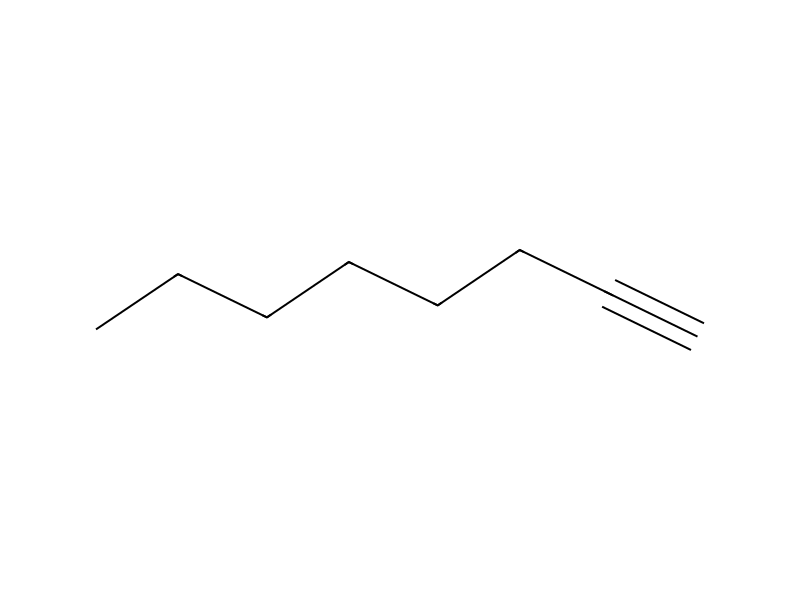
[C:1]([N:8]1[CH2:12][CH2:11][CH2:10][C@@H:9]1[CH2:13][O:14][C:15]1[CH:16]=[N:17][CH:18]=[C:19](Br)[CH:20]=1)([O:3][C:4]([CH3:7])([CH3:6])[CH3:5])=[O:2].[CH:22]#[C:23][CH2:24][CH2:25][CH2:26][CH2:27][CH2:28][CH3:29].CCN(CC)CC>C(Cl)Cl.[Cu]I>[C:1]([N:8]1[CH2:12][CH2:11][CH2:10][C@@H:9]1[CH2:13][O:14][C:15]1[CH:16]=[N:17][CH:18]=[C:19]([C:22]#[C:23][CH2:24][CH2:25][CH2:26][CH2:27][CH2:28][CH3:29])[CH:20]=1)([O:3][C:4]([CH3:7])([CH3:6])[CH3:5])=[O:2]Participants
6
Reactant 3


Product 1

Reagents, catalysts & solvents 2


Procedure
A mixture of 3-(1-BOC-2-(R)-pyrrolidinylmethoxy)-5-bromopyridine (300 mg, 0.84 mmol), 1-octyne (0.2 mL, 1.4 mmol), Pd(PPh)3Cl2 (12 mg), CuI (catalytic amount) and NEt3 (2.45 mL) in CH2Cl2 (7 mL) was heated at reflux for 16 h. The solvent was removed, and the residue was washed with 10% NaOH then extracted with CH2Cl2. The organic extract was dried (MgSO4) and concentrated. The residue was chromatographed (silica gel; CHCl3/MeOH, 10:1) to afford the title compound (302 mg) that contaminated with starting material.
Workup
- temperaturewas heated
- temperatureat reflux for 16 h
- customThe solvent was removed
- washthe residue was washed with 10% NaOH
- extractionthen extracted with CH2Cl2
- extractionThe organic extract
- dry with materialwas dried (MgSO4)
- concentrationconcentrated
- customThe residue was chromatographed (silica gel; CHCl3/MeOH, 10:1)
Sources & evidence
- ORD record
- ord-7477374a8eff4573ba8db11527a307b1
- Source dataset
- uspto-grants-2002_08
- Patent number
- US06437138B1
Reaction notes
Loading…