Isobutylene → 7-Tert-butoxy-1-nitronaphthalene
Reaction equation

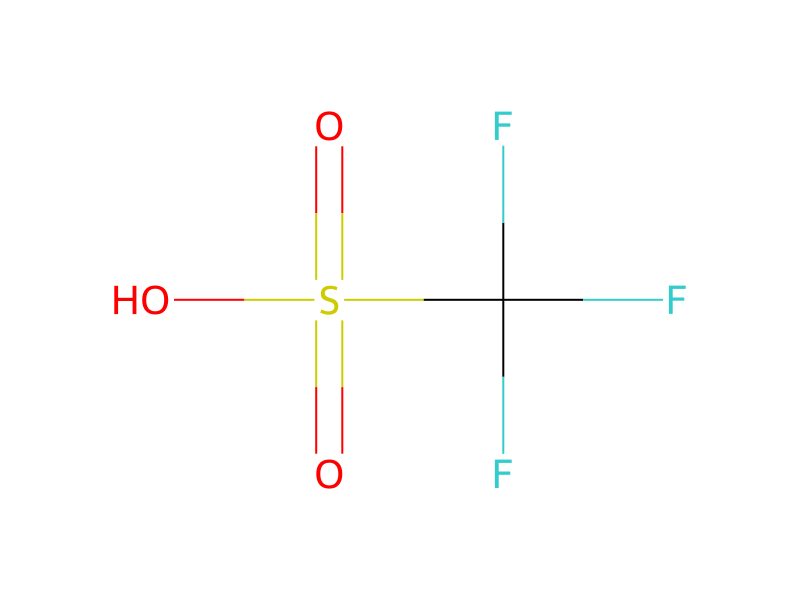
[CH3:1][C:2](=[CH2:4])[CH3:3].[N+:5]([C:8]1[CH:9]=[CH:10][CH:11]=[C:12]2[C:17]=1[CH:16]=[C:15]([OH:18])[CH:14]=[CH:13]2)([O-:7])=[O:6].FC(F)(F)S(O)(=O)=O.C(N(CC)CC)C>C(Cl)Cl>[C:2]([O:18][C:15]1[CH:16]=[C:17]2[C:12]([CH:11]=[CH:10][CH:9]=[C:8]2[N+:5]([O-:7])=[O:6])=[CH:13][CH:14]=1)([CH3:3])([CH3:1])[CH3:4]Participants
6
Reactant 4



Product 1

Reagents, catalysts & solvents 1

Conditions
- Temperature
- -20 °C
Procedure
Isobutylene (150 mL) was condensed into a stirred mixture of 8-nitro-2-naphthol, as described above in Step C, (4.35 g, 23.0 mmol) in CH2Cl2 (200 mL) at −78° C. Trifluoromethanesulfonic acid (0.203 mL, 2.30 mmol) was added and the mixture was allowed to slowly warm to −20° C. over about 4 hours. Triethylamine (2.56 mL, 18.4 mmol) was added and the mixture was allowed to warm to ambient temperature, then concentrated under reduced pressure. The crude product was purified by flash column chromatography on silica, eluting with hexane—5% EtOAc to yield the titled product.
Workup
- customcondensed
- temperatureto warm to ambient temperature
- concentrationconcentrated under reduced pressure
- customThe crude product was purified by flash column chromatography on silica
- washeluting with hexane—5% EtOAc
Sources & evidence
- ORD record
- ord-b8447f05f73942669ca8524e16ba33c6
- Source dataset
- uspto-grants-2002_08
- Patent number
- US06441017B1
Reaction notes
Loading…