Oxygen → Vanillin
Reaction equation

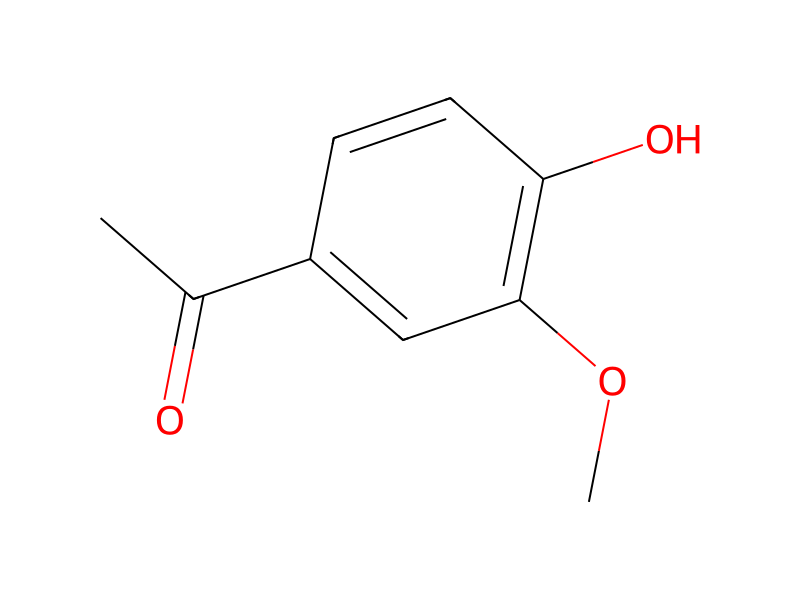
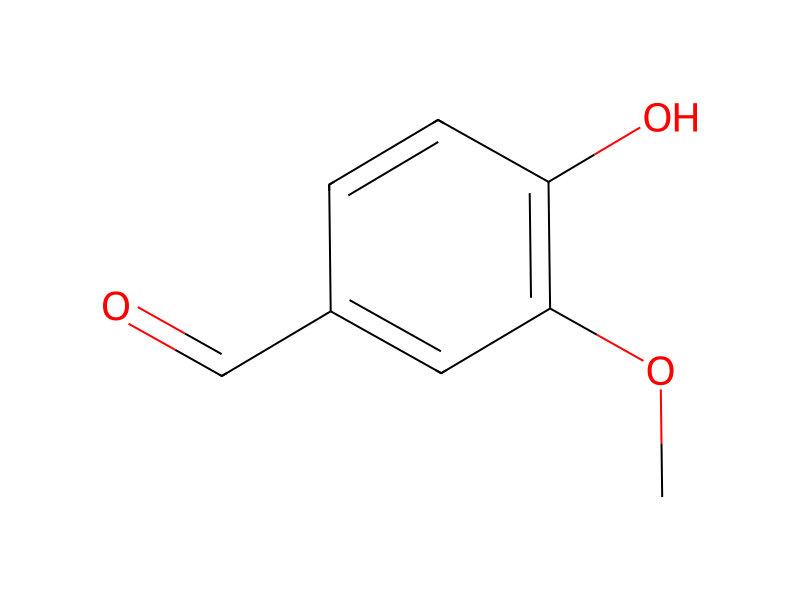
C[C:2]([C:4]1[CH:12]=[CH:11][C:9]([OH:10])=[C:6]([O:7][CH3:8])[CH:5]=1)=[O:3].[OH-].[Na+].O=O.[Na].[N+](C1C=C(S([O-])(=O)=O)C=CC=1)([O-])=O>[Cu].[Mn].[Fe]>[O:3]=[CH:2][C:4]1[CH:12]=[CH:11][C:9]([OH:10])=[C:6]([O:7][CH3:8])[CH:5]=1Participants
8
Reactant 4



Product 1
Reagents, catalysts & solvents 3



Conditions
- Temperature
- 180 °C
Procedure
Two-gram samples of acetovanillone were separately placed in a batch type reactor vessel with 100 gr of 2N NaOH so that the ratio of NaOH to acetovanillone was 4:1. The reactor vessel was heated to about 180° C. and pressurized with either air or air enriched to 40% oxygen to the pressures indicated in Table 1. The reaction was allowed to proceed for the time indicated in Table 1. In some cases, as indicated in Table 1, sulfates and oxides of the transition elements copper, manganese and iron were employed as catalyst and in one case sodium-m-nitrobenzene sulfonate abbreviated as NAMNO. The resulting oxidation products were analyzed by gas chromatography and yields of vanillin (Van), are reported in Table 1.
Sources & evidence
- ORD record
- ord-5105c8a16ae749e8b18e11f50c929270
- Source dataset
- uspto-grants-1987_09
- Patent number
- US04691061
Reaction notes
Loading…