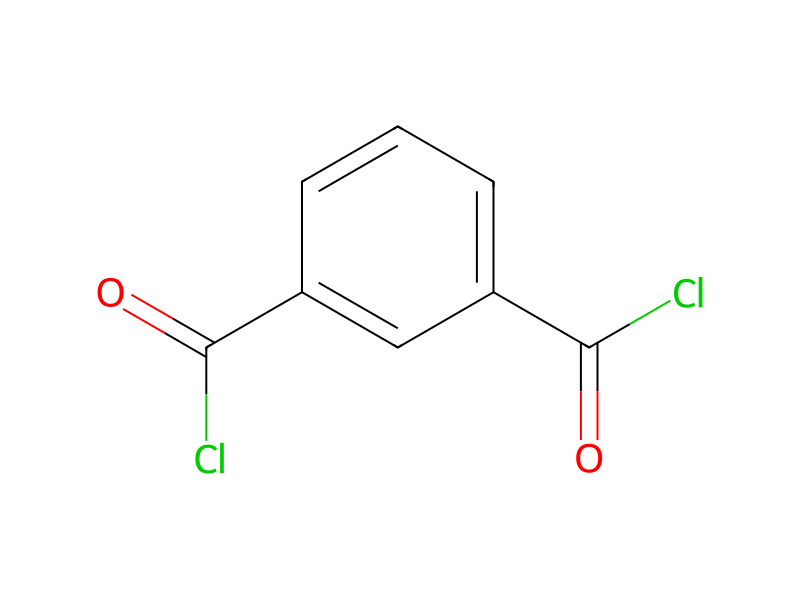
Isophthaloyl chloride → HCID 13878962, compound
Reaction equation

[OH:1][C:2]1[CH:12]=[CH:11][C:5]([C:6]([O:8][CH2:9][CH3:10])=[O:7])=[CH:4][CH:3]=1.[C:13](Cl)(=[O:23])[C:14]1[CH:22]=[CH:21][CH:20]=[C:16]([C:17](Cl)=[O:18])[CH:15]=1>>[CH2:9]([O:8][C:6]([C:5]1[CH:4]=[CH:3][C:2]([O:1][C:13](=[O:23])[C:14]2[CH:22]=[CH:21][CH:20]=[C:16]([C:17]([O:1][C:2]3[CH:3]=[CH:4][C:5]([C:6]([O:8][CH2:9][CH3:10])=[O:7])=[CH:11][CH:12]=3)=[O:18])[CH:15]=2)=[CH:12][CH:11]=1)=[O:7])[CH3:10]Participants
3


Procedure
A similar procedure to Example 5 is carried out by using ethyl p-hydroxybenzoate and isophthalic dichloride. The reaction product is recrystallized from chloroform-ethyl acetate (1:1) to yield di(p-ethoxycarbonylphenyl)isophthalate, m.p. 123°-125° C., as white crystals.
Workup
- customThe reaction product is recrystallized from chloroform-ethyl acetate (1:1)
Sources & evidence
- ORD record
- ord-52a1e902eb1246bf93303bcdebc23483
- Source dataset
- uspto-grants-1987_09
- Patent number
- US04695649
Reaction notes
Loading…