Triethylamine → HCID 13983071, compound
Reaction equation

[CH3:1][C:2]1([CH3:10])[CH2:7][C:6](=[O:8])[CH2:5][C:4](=[O:9])[CH2:3]1.C(N(CC)CC)C.[Cl:18][C:19]1[CH:27]=[CH:26][C:22]([C:23](Cl)=[O:24])=[CH:21][CH:20]=1.C[Si](C#N)(C)C>C(#N)C>[Cl:18][C:19]1[CH:27]=[CH:26][C:22]([C:23]([CH:5]2[C:6](=[O:8])[CH2:7][C:2]([CH3:10])([CH3:1])[CH2:3][C:4]2=[O:9])=[O:24])=[CH:21][CH:20]=1Participants
6
Reactant 4


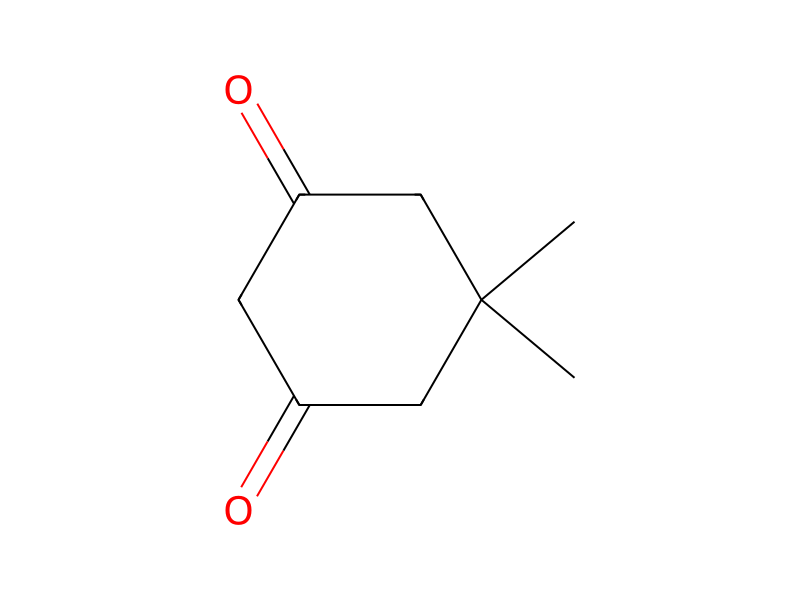

Product 1

Reagents, catalysts & solvents 1

Procedure
5,5-dimethylcyclohexane-1,3-dione (7.01 g, 0.05 mole), acetonitrile (80 ml), and triethylamine (21 ml, 0.15 mole) were combined in a flask, and placed under a nitrogen atmosphere. A solution of 4-chlorobenzoyl chloride (6.4 ml, 0.05 mole) in acetonitrile (20 ml) was added over 15 inutes while stirring and cooling with an ambient temperature water bath. Trimethylsilyl cyanide (0.33 ml, 2.55 mmole) was added, and the reaction was heated and stirred at 40° C. for 3 hours whereupon the reaction was complete.
Workup
- temperaturethe reaction was heated
- stirringstirred at 40° C. for 3 hours whereupon the reaction
Sources & evidence
- ORD record
- ord-206f7bd1967d4beb84c4b1452419fc61
- Source dataset
- uspto-grants-1987_09
- Patent number
- US04695673
Reaction notes
Loading…