Chlorobenzene → Biphenyl
Reaction equation

[OH-].[Na+].C([O-])=O.[Na+].Cl[C:8]1[CH:13]=[CH:12][CH:11]=[CH:10][CH:9]=1>[Pd]>[C:8]1([C:8]2[CH:13]=[CH:12][CH:11]=[CH:10][CH:9]=2)[CH:13]=[CH:12][CH:11]=[CH:10][CH:9]=1Participants
Reactant 3


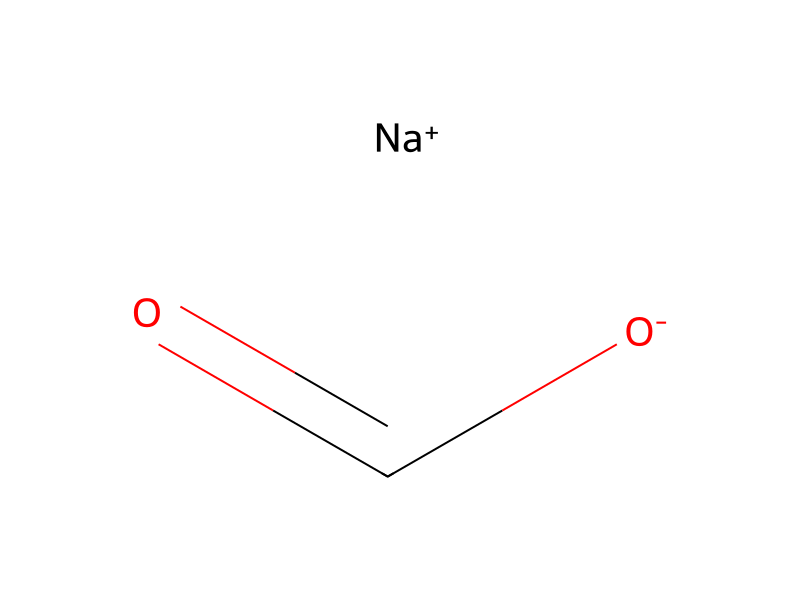
Product 1

Reagents, catalysts & solvents 1

Procedure
Aromatic compounds containing more than one ring may be referred to as ring assemblies. Many compounds of this type are not readily available and have to be produced by condensation of aromatic compounds containing fewer rings, in particular derivatives of benzene. Ring assemblies containing substituent groups, for example --OH or --COOH groups are difficult to obtain and hence such compounds are expensive. Chemical Abstracts, Vol 95 (1981), abstract 115039y discloses the preparation of bisphenols by a coupling reaction of a halophenol in the presence of a palladium catalyst and a base. Using 4-chlorophenol a yield of about 30% of 4,4'-dihydroxybiphenyl was obtained. A coupling reaction using haloaryl compounds in the presence of sodium hydroxide, sodium formate, a surfactant and a palladium on charcoal is disclosed in Synthesis, July 1978, pages 537 and 538. Using the chloro compounds such as chlorobenzene, a yield of only about 50% of biphenyl is obtained in 24 hours. Furthermore, using this process we have found the reaction to be slow, in some instances giving conversions of about 20 % after two hours, and we have been unable to prepare 4,4'-dihydroxybiphenyl.
Workup
- customA coupling reaction
Sources & evidence
- ORD record
- ord-6796a0b475eb4ed28fdbf60214ef943f
- Source dataset
- uspto-grants-1989_07
- Patent number
- US04851538
Reaction notes
Loading…