Methanesulfonyl chloride → HCID 57544766, compound
Reaction equation

[F:1][C:2]1([F:20])[CH2:5][CH:4]([CH2:6][CH:7]([NH:10][C:11](=[O:19])[O:12][CH2:13][CH2:14][Si:15]([CH3:18])([CH3:17])[CH3:16])[CH2:8]O)[CH2:3]1.C[CH2:22][N:23](C(C)C)C(C)C.CS(Cl)(=O)=O.[CH3:35][C:36]([O:39][C:40]([O:42]C(OC(C)(C)C)=O)=O)([CH3:38])[CH3:37]>C(Cl)Cl>[CH3:16][Si:15]([CH3:18])([CH3:17])[CH2:14][CH2:13][O:12][C:11]([NH:10][CH:7]([CH2:8][N:23]([C:40]([O:39][C:36]([CH3:38])([CH3:37])[CH3:35])=[O:42])[CH3:22])[CH2:6][CH:4]1[CH2:5][C:2]([F:20])([F:1])[CH2:3]1)=[O:19]Participants


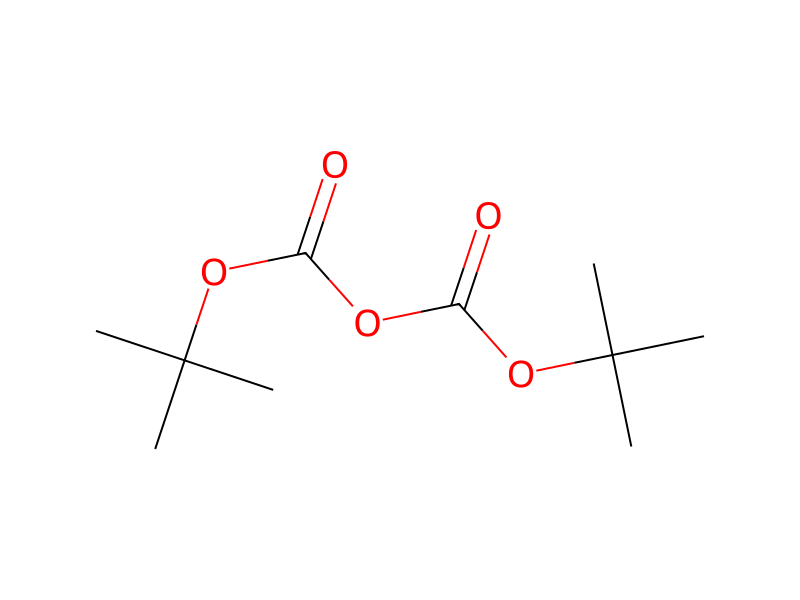



Conditions
- Temperature
- 0 °C
Procedure
2-(Trimethylsilyl)ethyl 3-(3,3-difluorocyclobutyl)-1-hydroxypropan-2-ylcarbamate (240 mg, 0.776 mmol) was dissolved in CH2Cl2 (4 mL) and the solution was cooled to 0° C. DIEA (301 mg, 2.32 mmol, 3.0 equiv) was added followed by MsCl (133 mg, 1.16 mmol, 1.5 equiv) and the mixture was stirred for 30 min at 0° C. LC-MS analysis showed consumption of the alcohol and formation of the desired mesylate. The reaction was quenched by addition of aq citric acid (10% by weight). The layers were separated and the aqueous phase was extracted with additional CH2Cl2. The combined organic layers were dried over Na2SO4, filtered and solvent was removed. The residue was taken up in methylamine solution (30 wt % in ethanol, 10 mL). Methanol was added dropwise to aid dissolution. The mixture was divided into three 4 mL portions. Each portion was separately heated to 150° C. for 7 min in a CEM microwave reactor. The four reaction mixtures were combined and volatile materials were removed. The residue was dissolved in acetonitrile (7 mL) and 1.0 M aq NaOH (2.0 mL) was added, followed by Boc2O (186 mg, 0.854 mmol, 1.1 equiv). After 1 h starting amine was still observed by LC-MS and additional Boc2O (1.1 equiv) was added. After 1 h all the amine was converted into the Boc derivative. The solvent was removed in vacuo and the residue was taken up in EtOAc and water. The layers were separated and the organic layer was washed with sat'd aq NaHCO3, brine and evaporated. The diamine was purified by flash chromatography on 12 g of silica, eluting with a 0 to 50% EtOAc in hexanes gradient. The fractions which stained with ninhydrin were combined and evaporated to yield 2-(2-(trimethylsilyl)ethoxycarbonylamino)-1-(3,3-difluorocyclobutyl)-3-(N-(t-butoxycarbonyl)-N-methylamino)-propane (56 mg, 15%) of the deprotected amine. 1H and 19F NMR were consistent with the desired product.
Workup
- customconsumption of the alcohol and formation of the desired mesylate
- customThe reaction was quenched by addition of aq citric acid (10% by weight)
- customThe layers were separated
- extractionthe aqueous phase was extracted with additional CH2Cl2
- dry with materialThe combined organic layers were dried over Na2SO4
- filtrationfiltered
- customsolvent was removed
- additionMethanol was added dropwise
- dissolutiondissolution
- temperatureEach portion was separately heated to 150° C. for 7 min in a CEM microwave reactor
- customThe four reaction mixtures
- customvolatile materials were removed
- dissolutionThe residue was dissolved in acetonitrile (7 mL)
- addition1.0 M aq NaOH (2.0 mL) was added
- waitAfter 1 h starting
- additionwas added
- customThe solvent was removed in vacuo
- customThe layers were separated
- washthe organic layer was washed with sat'd aq NaHCO3, brine
- customevaporated
- customThe diamine was purified by flash chromatography on 12 g of silica
- washeluting with a 0 to 50% EtOAc in hexanes gradient
- customevaporated
Sources & evidence
- ORD record
- ord-1b6e9d9c3b5142a5a5189d629639c375
- Source dataset
- uspto-grants-2010_07
- Patent number
- US07754737B2
Reaction notes
Loading…