Dimethyl Sulfoxide → 2-Ethylpropanedioyl dichloride
Reaction equation

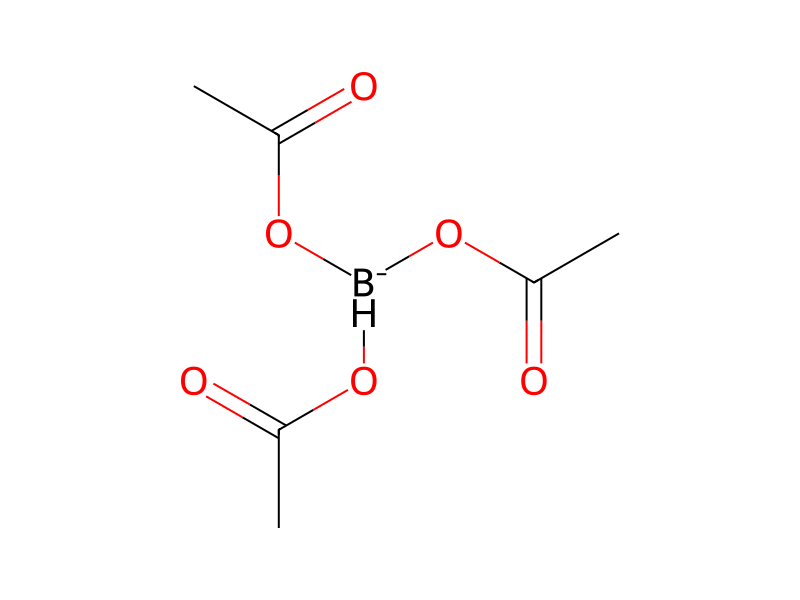
CS(C)=O.[C:5](Cl)(=O)[C:6]([Cl:8])=[O:7].FC1C=C(C=[C:17](F)[CH:18]=1)N.C(O[BH-](O[C:30](=[O:32])C)OC(=O)C)(=O)C.C(Cl)[Cl:34]>C(N(CC)CC)C.C(O)(=O)C>[CH2:17]([CH:5]([C:6]([Cl:8])=[O:7])[C:30]([Cl:34])=[O:32])[CH3:18]Participants







Procedure
Scheme 1 shows that a solution of 4,4′dichlorobenzophenone and hydroxylamine hydrochloride in a solvent such as ethanol in the presence of potassium hydroxide and stirred at room temperature to the reflux temperature of the solvent for 1-3 hrs can afford the oxime (step a). Reduction of the oxime to the amine can be accomplished using lithium aluminum hydride in THF solution at reflux (step b) (J. Med. Chem., 885 (1973)). Treatment of the amine with epichlorohydrin in a solvent such as ethanol at reflux should provide the azetidinol (step c) (J. Heterocyclic Chem., 271 (1994)). Oxidation of the alcohol may be carried out −78° C. by treatment with a solution of DMSO in methylene chloride which has been treated with oxalyl chloride for 3 to 7 hours, followed by addition of a teriary amine such as triethyl amine and further stirring of the reaction mixture at ambient temperature for 12-24 hours (step d). Reductive amination of the ketone with an amine such as 3,5-difluoroaniline can be accomplished with triacetoxyborohydride and acetic acid in methylene chloride solution at ambient temperature over a period of 24-48 hours (step e). Treatment of the secondary amine with ethyl malonyl chloride in a solvent such as methylene chloride in the presence of triethyamine at 0° C. to room temperature should afford the malonamide ester (step f). Hydrolysis of the ester using lithium hydroxide in aqueous THF solution should produce, after acidification, the carboxylic acid (step g), which may be coupled with an amino ester such as the ethyl ester of alanine in the presence of isobutylchloroformate (IBCF) and N-methylmorpholine in methylene chloride at 0° C. to room temperature to yield the alanine ester adduct (step h). Hydolysis of the ester, as above, with LiOH solution should afford the acid (step i), and subsequent treatment with IBCF and anhydrous ammonia can give the amide (step j). In like manner, the acid of step g can also be converted to the amide using IBCF and anhydrous ammonia (step k).
Sources & evidence
- ORD record
- ord-2851be7f28a4422bae4ed43cac51f140
- Source dataset
- uspto-grants-2010_07
- Patent number
- US07759335B2
Reaction notes
Loading…