Cyclopentylamine → 2-chloro-N-cyclopentyl-5-nitropyrimidin-4-amine
Reaction equation

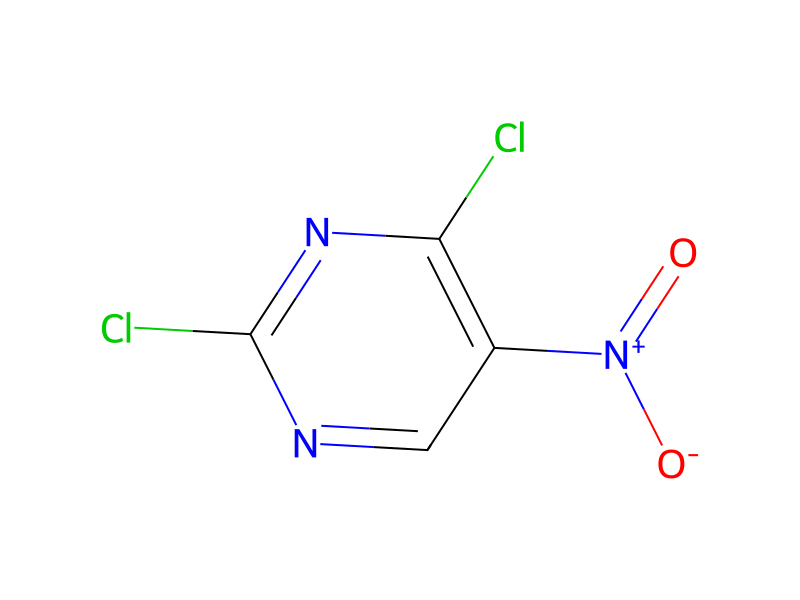
[Cl:1][C:2]1[N:7]=[C:6](Cl)[C:5]([N+:9]([O-:11])=[O:10])=[CH:4][N:3]=1.[CH:12]1([NH2:17])[CH2:16][CH2:15][CH2:14][CH2:13]1.C(N(CC)C(C)C)(C)C>C1COCC1>[Cl:1][C:2]1[N:7]=[C:6]([NH:17][CH:12]2[CH2:16][CH2:15][CH2:14][CH2:13]2)[C:5]([N+:9]([O-:11])=[O:10])=[CH:4][N:3]=1Participants
Reactant 3


Product 1

Reagents, catalysts & solvents 1

Conditions
- Temperature
- -78 °C
Procedure
2,4-Dichloro-5-nitropyrimidine (10.31 mmol, 2 g) and cyclopentylamine (10.31 mmol, 1.02 mL) were dissolved in THF (60 mL) and cooled to −78° C. N,N-diisopropylethylamine (10.31 mmol, 1.8 mL) was added dropwise. The reaction mixture was stirred at −78° C. for about 45 minutes. The cooling bath was removed and the reaction mixture was stirred at room temperature for about 16 hours. After removal of the solvent the residue was redissolved in EtOAc and washed with water and brine. The organic phase was dried over MgSO4 and the solvent evaporated. The residue was purified using column chromatography (SiO2, 9:1 n-hexanes/ethyl acetate) to give the desired product (2.11 g, 84% yield). ES-MS: 242 (M+1). When the hydrochloride salt of an amine is used in place of the cyclopentylamine described above, 2 to 3 equivalents of N,N-diisopropylethylamine and dichloromethane are used as solvent.
Workup
- customThe cooling bath was removed
- stirringthe reaction mixture was stirred at room temperature for about 16 hours
- customAfter removal of the solvent the residue
- dissolutionwas redissolved in EtOAc
- washwashed with water and brine
- dry with materialThe organic phase was dried over MgSO4
- customthe solvent evaporated
- customThe residue was purified
Sources & evidence
- ORD record
- ord-24c892339d9843b1819ae4161782390e
- Source dataset
- uspto-grants-2010_07
- Patent number
- US07759342B2
Reaction notes
Loading…