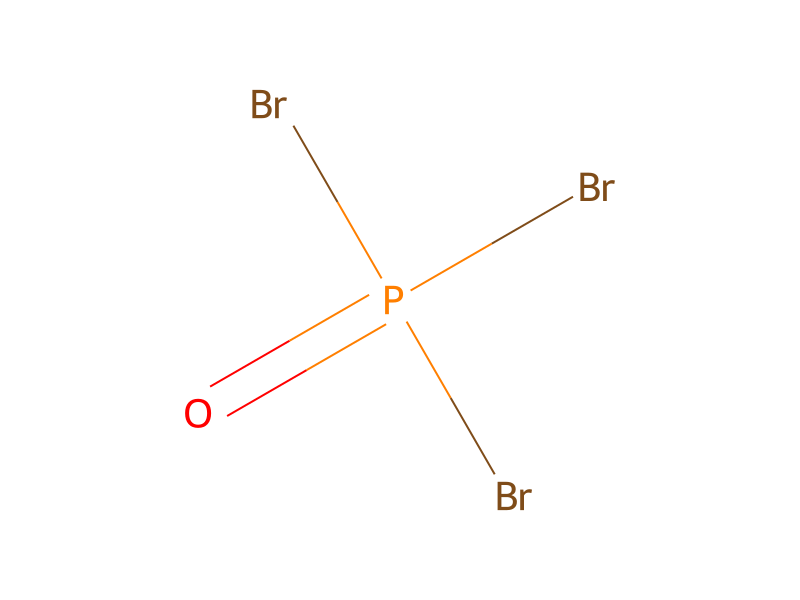
Phosphorus oxybromide → 1-Chloropyrido(3,4-d)pyridazine
Reaction equation

[C:1]1(O)[N:6]=[N:5][CH:4]=[C:3]2[CH:7]=[N:8][CH:9]=[CH:10][C:2]=12.P(Br)(Br)(Br)=O.O=P(Cl)(Cl)[Cl:19]>>[Cl:19][C:1]1[N:6]=[N:5][CH:4]=[C:3]2[CH:7]=[N:8][CH:9]=[CH:10][C:2]=12Participants
4



Procedure
A flask was charged with pyrido[3,4-d]pyridazin-1-ol (0.080 g, 0.54 mmol) (see Brzezinski, J. Z.; Bzowski, H. B.; Epsztajin, J. Tetrahedron, 1996, 52, 3261-72) and phosphorus oxybromide (0.62 g, 2.2 mmol) and heated at 80 C 2:30pm. Solid still stuck to walls of flask so 3 mL POCl3 was added and refluxed 4 h and the mixture concentrated in-vacuo. The mixture was quenched with ice and sat NaHCO3 and the brown solid collected. The solid is a mixture of the title compound and 1-bromopyrido[3,4-d]pyridazine (22 mg). MS (ESI pos. ion) m/z: 166 (MH+). Calc'd exact mass for C7H4ClN3: 165.
Workup
- temperatureheated at 80 C 2
- customSolid still stuck to walls of flask
- temperaturerefluxed 4 h
- concentrationthe mixture concentrated in-vacuo
- customThe mixture was quenched with ice
- customthe brown solid collected
- additiona mixture of the title compound and 1-bromopyrido[3,4-d]pyridazine (22 mg)
Sources & evidence
- ORD record
- ord-05335e124fc54eeda6e318b6c295d5f3
- Source dataset
- uspto-grants-2010_07
- Patent number
- US07759344B2
Reaction notes
Loading…