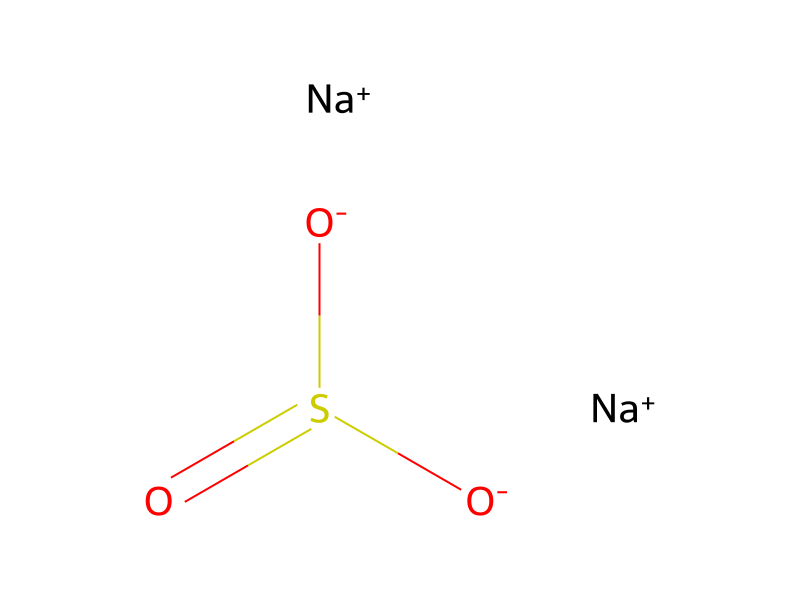
Sodium Sulfite → HCID 67260857, compound
Reaction equation

[CH:1]([N:5]1[CH:9]=[C:8]([C:10]2[CH:15]=[CH:14][N:13]=[CH:12][CH:11]=2)[C:7]([C:16]2[S:17][C:18]([Cl:21])=[CH:19][CH:20]=2)=[N:6]1)([CH2:3][CH3:4])[CH3:2].ClC1C=CC=C(C(OO)=[O:30])C=1.S([O-])([O-])=O.[Na+].[Na+]>ClCCl>[CH:1]([N:5]1[CH:9]=[C:8]([C:10]2[CH:11]=[CH:12][N+:13]([O-:30])=[CH:14][CH:15]=2)[C:7]([C:16]2[S:17][C:18]([Cl:21])=[CH:19][CH:20]=2)=[N:6]1)([CH2:3][CH3:4])[CH3:2]Participants
5
Reactant 3


Product 1

Reagents, catalysts & solvents 1

Procedure
To a solution of 4-[1-sec-butyl-3-(5-chloro-2-thienyl)-1H-pyrazol-4-yl]pyridine (1 eq, 7.2 mmol) in 23 mL of dichloromethane was added metachloroperbenzoic acid 70% (1.5 eq, 10.9 mmol) in small portion at 0° C. The reaction was then stirred at room temperature overnight. Sodium sulfite (1.5 eq, 10.9 mmol) was then added and the organic layer was then washed with a 2M solution of potassium carbonate, dried over MgSO4, filtered and concentrated to afford 2.25 g of 4-[1-sec-butyl-3-(5-chloro-2-thienyl)-1H-pyrazol-4-yl]pyridine N oxide (83% yield) which was used in the next step without further purification.
Workup
- washthe organic layer was then washed with a 2M solution of potassium carbonate
- dry with materialdried over MgSO4
- filtrationfiltered
- concentrationconcentrated
Sources & evidence
- ORD record
- ord-7a60ad03d44642cb920a7ad362fc47a9
- Source dataset
- uspto-grants-2014_04
- Patent number
- US08685974B2
Reaction notes
Loading…