Hydrochloric Acid → HCID 555278, compound
Reaction equation

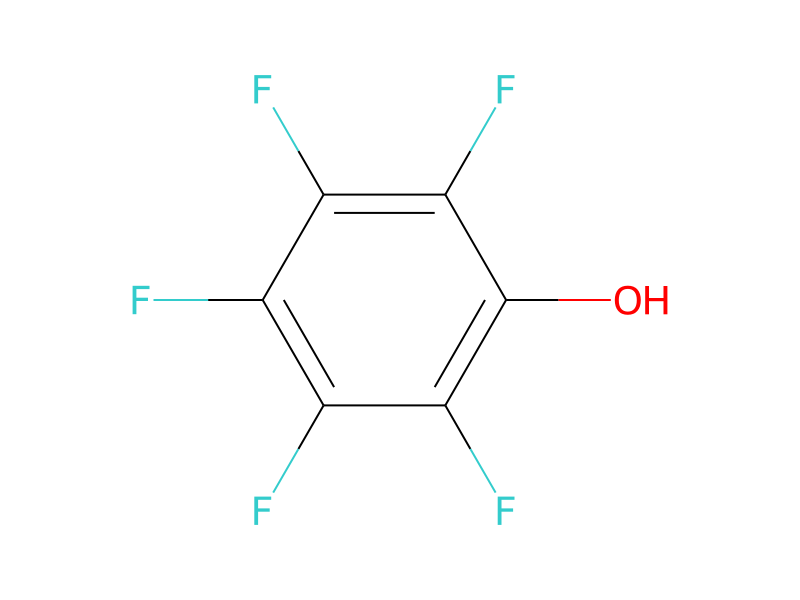
[CH3:1][Si:2]([CH3:5])([CH3:4])Cl.Cl.[F:7][C:8]1[C:13]([OH:14])=[C:12]([F:15])[C:11]([F:16])=[C:10]([F:17])[C:9]=1[F:18]>>[CH3:1][Si:2]([CH3:5])([CH3:4])[O:14][C:13]1[C:12]([F:15])=[C:11]([F:16])[C:10]([F:17])=[C:9]([F:18])[C:8]=1[F:7]Participants
4



Procedure
In a manner similar to Example 1, 2.5 mol of boiling trimethylchlorosilane was placed without solvent in a 2-liter reactor which contained, instead of the packed column, a reflux condenser (nitrogen gas flooded, with hydrogen chloride exhaust), and about 2 mol (370 g) of pentafluorophenol (m.p. 39° C.) in molten form was fed into it over a period of 30 minutes. The reactor temperature then rose to about 124° C. As boiling continued the temperature rose to about 160° C. in 90 minutes. Then a distillation was performed at about 300 mbar and 118° C. The yield of trimethylpentafluorophenoxysilane was virtually quantitative.
Workup
- customthen rose to about 124° C
- waitrose to about 160° C. in 90 minutes
- distillationThen a distillation
- customwas performed at about 300 mbar and 118° C
Sources & evidence
- ORD record
- ord-3c3fa4c59d6540f1871a5b426f0ec4ee
- Source dataset
- uspto-grants-1987_02
- Patent number
- US04642363
Reaction notes
Loading…